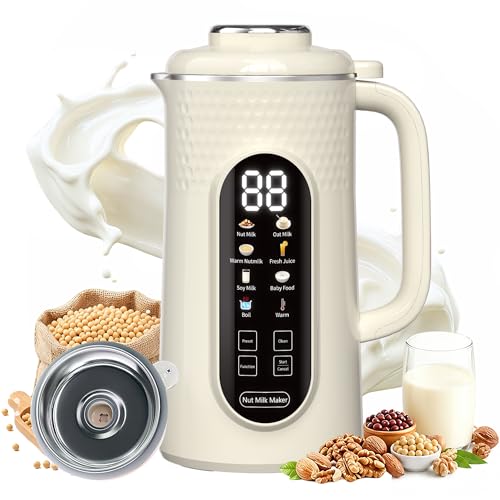
Home & Kitchen 9 Almond Milk Makers for Silky Dairy-Free Milk
P
By the Pickpedia Team
·9 picks compared
·Last verified September 2026
Affiliate disclosure: As an Amazon Associate, Pickpedia earns from qualifying purchases. Links on this page are paid links, and we may earn a commission at no extra cost to you. This never affects our picks or scores.
Quick answer
Pick a nut milk maker by capacity, blade count, and cleanup. Family batches favor 42oz to 50oz machines with self-cleaning cycles. Small households do well with 32oz to 35oz units. Owners prize no straining, delay start, and keep warm. Match features to how you drink plant milk daily.
9 Almond Milk Makers for Silky Dairy-Free Milk at a glance
Why you can trust this guide
We compared these picks using verified manufacturer specifications, available manuals and documentation, current retailer listings, and patterns in owner feedback, alongside editorial research. We focus on measurable differences such as performance, capacity, usability, and build quality. Pickpedia does not present editorial research as laboratory testing, and we do not claim hands-on testing unless it was actually performed.
How we chose: We compared nine plant milk makers across capacity, blade design, heating, self-cleaning, and included accessories that matter for daily home use.
Home plant milk makers grind soaked or dry nuts, then blend and often heat them into smooth beverages in minutes. Most modern units skip pre-soaking, run one-touch programs, and rinse themselves. Capacity, blade count, and cleanup effort separate the field more than anything else.
This roundup groups machines by who they suit, from single-serve counters to busy family kitchens. Every claim below rests on listed specifications, manufacturer features, and what reviewers commonly note. Use the buying guide and FAQs to weigh straining, heating, and warranty against how you actually drink milk.
Our top picks
Ten preset programs cover almond, cashew, coconut, and multigrain milk without pre-soaking, so mornings move faster. A 304 stainless steel chamber pairs with ten x-cross blades and four flow-disrupting columns to break clumps, and owners report no straining needed. The 34oz boiling capacity suits shared breakfasts, and delay start plus a four hour keep warm add real convenience. A high-temperature clean cycle finishes in two to five minutes. One limitation reviewers note is that stainless chambers hide the blend, so you cannot watch texture develop like glass models allow.
Capacity34oz boiling, 27oz cold
Blades10 stainless x-cross
Programs10 in 1
CleaningHigh-temp, 2 to 5 min
Pros
- No filtering for silky results
- Delay start and keep warm
- Wide program range
Cons
- Opaque chamber hides blending
- Boiling and cold capacities differ
Check price on Amazon ›
Twelve precision blades give this model an edge on grind, and the maker describes consistently fine milk without post-blend filtering. A durable 304 stainless inner container and four flow-disrupting columns keep clumps moving through the blade path. Ten programs span nut milk, shake, soy milk, juice, and chowder, and soaking is skipped entirely. Delay start up to twelve hours and a four hour keep warm let you set it overnight for fresh milk at breakfast. Like its sibling, the sealed chamber means you cannot observe progress, and an audible alert is the only cue that a batch has finished.
Capacity34oz boiling, 27oz cold
Blades12 stainless precision
Programs10 in 1
Timers12h delay, 4h warm
Pros
- Twelve blades for fine grind
- No straining required
- Overnight scheduling
Cons
- Sealed chamber, no visibility
- Relies on beep alerts only
Check price on Amazon ›
A recognized name in home plant milk, this machine turns any nut, seed, or grain into fresh milk within seconds of pressing the button. It measures roughly 12 by 9.5 by 6.5 inches and yields five to six cups per batch, enough for a household. Its standout is built-in pulp separation, so you skip the nut milk bag and the mess. Assembly of a few parts keeps cleanup manageable. Reviewers note it does not heat the milk, so anyone wanting warm drinks straight from the machine should look elsewhere among the heated models here.
Yield5 to 6 cups per batch
Footprint12 x 9.5 x 6.5 in
StrainingBuilt-in separation
IngredientsNuts, seeds, grains
Pros
- No nut milk bag needed
- Generous batch yield
- Simple one-button use
Cons
- Does not heat milk
- Multiple parts to rinse
Check price on Amazon ›
This 32oz maker keeps a small footprint while covering almond, oat, soy, and cashew milk plus juice, rice paste, and boiled water. High-speed stainless blades and a heating system grind and warm together, so most nuts and grains need no soaking. A water-circulation self-clean handles the interior, and a quick wipe keeps the exterior tidy. Eight one-touch programs make it approachable for beginners. Accessories include a measuring cup, brush, strainer, and nut milk bag. Its 32oz volume is the smallest here, so large families may need to run back-to-back batches to keep everyone served.
Capacity32oz
Programs8 in 1
CleaningWater-circulation self-clean
IncludedBag, strainer, brush, cup
Pros
- Compact for tight counters
- Self-cleaning interior
- Full accessory kit
Cons
- Smallest batch size here
- May need repeat batches
Check price on Amazon ›
A 35oz glass inner chamber sets this one apart, letting you watch nuts and oats turn smooth as the ten-blade system works. Beyond milk, it doubles as a countertop blender for juices and shakes thanks to combined blending and heating. Keep warm holds drinks at 140°F for up to six hours, while a twelve-hour delay start fits your schedule and auto shut-off adds safety. One-touch self-cleaning reduces residue between batches. Glass adds visibility but also weight and fragility, so reviewers advise careful handling and gentle placement compared with the sturdier stainless steel chambers elsewhere in this lineup.
Capacity35oz glass chamber
Blades10-blade system
Keep warm140°F up to 6h
SafetyAuto shut-off
Pros
- See-through glass chamber
- Doubles as blender
- Long keep-warm window
Cons
- Glass is heavier and fragile
- Needs careful handling
Check price on Amazon ›
Digital touch control and one-touch start make this 35oz maker friendly for first-timers wanting creamy plant milk in minutes. A nonstick interior resists residue, and an eleven-minute rinse cycle handles self-cleaning when you add water right after pouring. Eight programs cover juice, soymilk, almond milk, milkshake, boiled water, oat milk, rice paste, and cleaning, with delay start up to twelve hours. Select heated programs hold warmth for two hours, so drinks stay ready. Included accessories are lighter than some rivals, offering a brush, measuring cup, and sponge but no nut milk bag for those preferring extra straining.
Capacity35oz
Programs8 in 1
Cleaning11 min rinse, nonstick
Warm hold2h on select modes
Pros
- Nonstick, easy rinse
- Simple touch control
- Delay start scheduling
Cons
- No nut milk bag included
- Warm hold limited to two hours
Check price on Amazon ›
A 42oz capacity and curved IMD touch display headline this maker, suiting families of three to five. Ten blades pair with a dual-power system of 800W heating and a 150W motor, so it heats and pulverizes hard ingredients at once with no soaking. A square mixing column drives silky texture, and triple safety guards against overflow, dry-boil, and overheating. Twelve-hour delay start and twelve-hour keep warm at 131°F cover overnight prep. One-touch steam self-cleaning follows each batch. The color screen adds appeal but also complexity, so owners note a short learning curve before every mode feels intuitive.
Capacity42oz
Power800W heat, 150W motor
DisplayCurved IMD touchscreen
SafetyOverflow, dry-boil, overheat
Pros
- Large family capacity
- Bright touchscreen controls
- Strong triple safety
Cons
- Screen adds a learning curve
- Larger counter footprint
Check price on Amazon ›
With 50oz capacity, this is the biggest batch maker here, yielding five to six cups of plant milk at once. A powerful motor drives twenty x-cross blades in a 3D layout that blends and strains to a smooth, grit-free finish with no filtering. Ten programs skip soaking and cover almond, cashew, oat, and soy milk plus smoothies and hot or cold vegan drinks. A visual glass design and low-noise soundproofing improve daily use, and a high-temperature clean runs in about two minutes. The generous size takes more counter room and longer to fill, so single drinkers may find it more machine than they need.
Capacity50oz, 5 to 6 cups
Blades20 x-cross, 3D
Programs10 in 1
CleaningHigh-temp, about 2 min
Pros
- Largest batch capacity
- Twenty blades, no filtering
- Low-noise operation
Cons
- Bulky on the counter
- Overkill for single servings
Check price on Amazon ›
The Nama M1 leans on patent-pending technology that blends, then gently separates solids, giving creamy milk and notably dry pulp you can reuse to cut waste. No soaking or messy straining is required, and a unique pulp extraction process keeps cleanup simple. It runs on 120V and ships with a cleaning brush, pulp pouch, and a lidded pitcher for ready pouring. A standout fifteen-year warranty signals confidence in lasting quality. Reviewers describe latte-worthy results, though this design centers on room-temperature milk rather than the heated, multi-program approach many stainless steel rivals here offer.
DesignBlend and separate solids
PulpDry, reusable
IncludedBrush, pouch, pitcher
Warranty15 years
Pros
- Very long warranty
- Dry reusable pulp
- No pre-soak or straining
Cons
- Focuses on unheated milk
- Fewer preset programs
Check price on Amazon ›
What to look for
Capacity that fits your household
Match the tank to how much you pour. Compact 32oz to 35oz makers suit one or two drinkers and tight counters. Larger 42oz to 50oz models serve families and cut how often you rerun batches. Remember that boiling, cold, and hot capacities often differ on the same machine, so read all three numbers.
Blades, motor, and texture
Smoothness comes from blade count, blade geometry, and motor strength working together. Models here range from ten to twenty x-cross blades, and several add flow-disrupting or mixing columns that keep clumps in the cutting path. A stronger motor paired with heating pulverizes dry nuts without soaking, which saves a full step in your routine.
Heating, programs, and timers
Decide whether you want warm milk straight from the machine. Heated units add soy milk, rice paste, and boiled water modes, plus keep warm holds and delay start up to twelve hours for overnight prep. Unheated designs focus on fresh room-temperature milk. More programs add flexibility but can mean a short learning curve on touchscreens.
Cleaning and straining
Cleanup makes or breaks daily use. Self-cleaning cycles run from about two to eleven minutes, and nonstick or steam interiors reduce scrubbing. Some makers separate pulp automatically so you skip the nut milk bag entirely, while others include a bag and strainer for those who want extra control over final texture.
Frequently asked questions
Do I need to soak nuts first?
Most machines here skip soaking because heating and high-speed blades pulverize dry nuts and grains directly. If you prefer, soaking can still soften ingredients and may yield a slightly creamier pour, but it is not required for everyday almond or oat milk on these models.
Will I still need a nut milk bag?
It depends on the design. Several makers advertise no filtering, and a few separate pulp automatically. Others include a nut milk bag and strainer so you can refine texture yourself. Check whether your chosen model handles separation internally before buying extra straining gear.
Can these machines heat the milk?
Many can. Heated models offer soy milk, boiled water, and rice paste modes plus keep warm holds. A couple of designs, including pulp-separating makers, focus on room-temperature milk. If warm drinks straight from the jug matter to you, confirm the machine lists heating and keep warm functions.
How long does cleaning take?
Self-clean cycles in this roundup run from roughly two minutes to about eleven minutes. Adding water right after pouring helps the cycle rinse residue before it dries. Nonstick and stainless interiors both wipe down quickly, and included brushes handle any spots the cycle misses.
How much milk does one batch make?
Batch size tracks capacity. Compact 32oz to 35oz units make single servings or a couple of cups, while 42oz to 50oz makers reach five to six cups per run. Choose based on daily volume so you are not constantly refilling or storing excess.
Are glass or stainless chambers better?
Each has trade-offs. Glass lets you watch the blend and monitor texture, but it weighs more and needs careful handling. Stainless steel chambers, often 304 grade, are sturdier and hide the process. Pick based on whether visibility or durability matters more in your kitchen.
Can I make more than almond milk?
Yes. These makers handle oat, soy, cashew, coconut, and multigrain milk, and many add juice, smoothies, shakes, and rice paste. Program counts range from eight to ten, so one appliance can replace several, provided you match ingredients to the listed modes.
What accessories usually come included?
Kits vary. Common extras are a cleaning brush, measuring cup or spoon, fine-mesh strainer, and a recipe booklet. Some bundles add a reusable nut milk bag, sponge, or pulp pouch. Review the included list, since a few models ship lighter and skip the milk bag.
The verdict
34oz 10 in 1 Automatic Nut Milk Maker with...
9.1/10
For most kitchens, the 34oz 10 in 1 with ten blades balances programs, no-filter results, and family capacity, earning our top pick. Big households should size up to the 50oz twenty-blade maker, while compact counters suit the KIDISLE 32oz. Choose the glass-chamber 35oz to watch the blend, and the Nama M1 rewards buyers who value dry reusable pulp and its long warranty. Match heating and capacity to how you drink plant milk.
Check price on Amazon ›
Our top pick, secure checkout via Amazon
Note: Availability and specifications change often. Always confirm the current details on Amazon before buying.