Security Cameras 5 Garage Door Alarms for Added Entry Security Now
P
By the Pickpedia Team
·5 picks compared
·Last verified September 2026
Affiliate disclosure: As an Amazon Associate, Pickpedia earns from qualifying purchases. Links on this page are paid links, and we may earn a commission at no extra cost to you. This never affects our picks or scores.
Quick answer
For most garages, a loud sensor alarm that mounts fast and warns you the moment a door opens gives the strongest deterrent. Pick a wireless kit if you want app alerts, a long-range unit for driveways, or a simple magnetic sensor for a single entry point.
5 Garage Door Alarms for Added Entry Security Now at a glance
Why you can trust this guide
We compared these picks using verified manufacturer specifications, available manuals and documentation, current retailer listings, and patterns in owner feedback, alongside editorial research. We focus on measurable differences such as performance, capacity, usability, and build quality. Pickpedia does not present editorial research as laboratory testing, and we do not claim hands-on testing unless it was actually performed.
How we chose: We compared five garage door alarms across loudness, range, installation, app control, and expandability to match different entry points.
A garage often becomes the weakest entry into a home, since side doors and overhead panels sit out of sight. A dedicated alarm closes that gap by sounding off the instant motion or an opening is detected. Options here range from full WiFi hubs to single stick-on sensors.
Choosing well depends on whether you want smartphone alerts, long outdoor detection, or a quiet standalone chime. Below, each pick is grouped by its clearest strength so you can match it to your setup. Every claim is grounded in the listed specifications and what owners report.
Our top picks
Built around a WiFi siren hub that pairs with the Tuya app over 2.4GHz, this kit handles garage entry, sheds, and porch package protection. The 120dB horn is loud enough to startle an intruder and wake the household, while instant phone alerts show whether each door sits open or closed. Setup needs no professional, since the siren plugs into an outlet and sensors mount with adhesive or screws. It expands to 30 wireless detectors and 20 remotes, so coverage grows with your home. One limitation: reliable operation leans on a steady 2.4GHz WiFi signal reaching the garage.
Siren Volume120dB
Connectivity2.4GHz WiFi, Tuya app
Expandable To30 sensors, 20 remotes
InstallPlug-in siren, adhesive or screws
Pros
- Loud 120dB siren with instant phone alerts
- Expands to many sensors and remotes
- Voice control and adjustable arming delays
Cons
- Depends on stable 2.4GHz WiFi reach
- App setup takes some initial configuring
Check price on Amazon ›
Designed for wide perimeters, this weather-resistant system picks up alarm signals up to half a mile between sensor and receiver using FSK and FHSS transmission to cut interference. Each motion sensor spots people or vehicles from 35 to 50 feet ahead, with two sensitivity settings to reduce false triggers from leaves or small animals. It rates for temperatures from minus 30 to 150 degrees Fahrenheit, so seasons pose little trouble. The bundle includes one receiver and two sensors, expandable to 32 sensors, with 35 melodies to tell zones apart. Note that batteries for the sensors are not included in the package.
Wireless RangeUp to 1/2 mile
Detection35 to 50 ft, 2 sensitivities
Temp Rating-30 to 150 F
Expandable To32 sensors
Pros
- Very long transmission range for big lots
- Weatherproof across all seasons
- Melody per zone identifies location
Cons
- Sensor batteries not included
- Actual range varies with terrain
Check price on Amazon ›
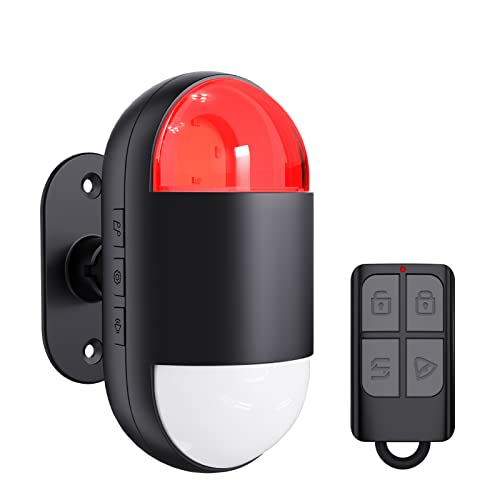
This standalone unit detects movement from 16 to 26 feet and fires a 125dB siren with a strobe light when triggered. Smart analysis aims to tell human motion apart from interference, trimming false alarms. It runs in doorbell or alarm mode with two volume levels, doubling as a chime or caregiver pager. A remote control reaches up to 328 feet in open space and carries a panic button for emergencies. Power comes from AAA batteries or USB charging, so it stays flexible for travel or a garage corner. Mounting takes under a minute with the film sticker, though the short detection range suits smaller spaces best.
Detection Range16 to 26 ft
Siren Volume125dB with strobe
Remote RangeUp to 328 ft
PowerAAA battery or USB
Pros
- Doubles as alarm, chime, or pager
- Dual power keeps it running anywhere
- Fast stick-on install under a minute
Cons
- Shorter detection range than outdoor units
- Single unit covers one zone only
Check price on Amazon ›
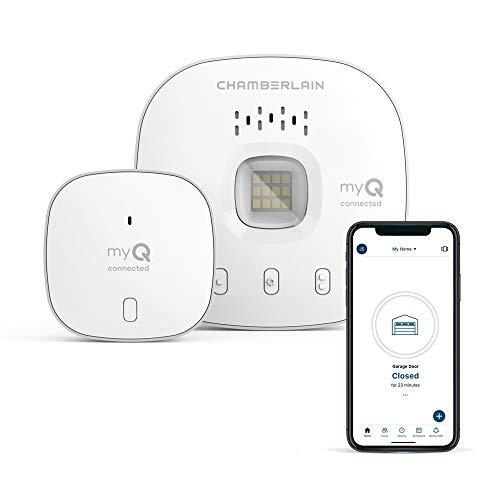
Rather than a siren, this hub answers the nagging question of whether the garage is shut by letting you open or close it from anywhere through the free myQ app. You can share access with family, set a nightly close schedule, and enable Amazon Key In-Garage Delivery for Prime members. Bluetooth and WiFi pairing keeps setup wire-light. It works with most opener brands made after 1993 that use photoelectric sensors, which is worth checking first. Reviewers note it does not support certain Chamberlain openers with a yellow learn button from a recent window, or any Linear opener, so compatibility matters before buying.
FunctionRemote open, close, status
ConnectivityWiFi and Bluetooth
AppFree myQ for iOS and Android
CompatibilityMost openers after 1993
Pros
- Control and monitor the door from anywhere
- Scheduled auto-close and shared access
- Enables in-garage package delivery
Cons
- Not compatible with some opener models
- No built-in siren for intrusion
Check price on Amazon ›
Five magnetic sensors let you guard the garage side door plus windows, cabinets, or an RV from one pack. When the magnet separates, the unit sounds continuously for 31 seconds until the door closes again. Three modes cover a 125dB alarm, a quieter 100dB alarm, and a 100dB chime, so you can match the setting to each spot. Installation means peeling the 3M tape and flipping the switch, with no wiring at all. Powered by included LR44 button cells, each sensor runs up to 13 months before a flashing light warns of low battery. These work best indoors and cover only openings, not open-room motion.
Pack Size5 sensors
Volume Modes125dB, 100dB alarm, chime
Alarm Duration31 seconds until closed
Battery LifeUp to 13 months
Pros
- Covers multiple doors and windows
- Three selectable volume and chime modes
- Long battery life with low warning
Cons
- Detects openings, not room motion
- Recommended for indoor placement only
Check price on Amazon ›
What to look for
Match the alarm to your entry type
Overhead garage doors, side entry doors, and windows each call for a different sensor. Motion units watch open floor space, magnetic sensors catch a door parting from its frame, and smart hubs monitor the opener itself. Map every weak point before choosing so nothing sits unwatched.
Decide how loud you need it
Volume drives deterrence. A 120dB or 125dB siren carries through a house and rattles an intruder, while a softer chime suits alerting without alarm. Several units here offer selectable levels, letting one device serve as a warning by day and a full alarm at night.
Weigh app alerts against standalone simplicity
WiFi systems push notifications to your phone and show door status remotely, which helps when you travel. Standalone battery alarms need no network and keep working during outages. Choose connectivity if you want oversight from afar, or simplicity if you prefer fewer moving parts.
Check range, power, and expandability
Outdoor and driveway units need long transmission range and weather tolerance, while indoor sensors prioritize easy mounting. Confirm whether batteries are included, how long they last, and how many sensors a hub accepts. Planning for expansion now saves rebuying later as coverage grows.
Frequently asked questions
Do garage door alarms need WiFi to work?
Not all of them. Standalone motion and magnetic sensors run on batteries and sound locally without any network. WiFi models add phone alerts and remote status, but they rely on a steady connection reaching the garage.
How loud should a garage alarm be?
Look for 120dB or higher if deterrence is the goal, since that level carries through walls and startles an intruder. Quieter chime modes near 100dB suit gentle alerts for a side door without a full alarm.
Can I install a garage door alarm myself?
Yes. Most units here mount with adhesive pads or screws and need no professional. Plug-in sirens go into an outlet, and stick-on sensors set up in under a minute, so a basic setup takes only a few minutes.
Will motion sensors trigger false alarms?
Quality sensors use analysis to separate human movement from leaves, small animals, or temperature shifts. Adjustable sensitivity settings help further. Placement matters too, so aim the sensor away from busy foliage and direct sun to keep false triggers down.
What is the difference between a smart hub and a siren alarm?
A smart hub like myQ monitors and controls the door opener, letting you close it remotely and confirm its status. A siren alarm instead reacts to intrusion with a loud warning. Some homes benefit from pairing both approaches.
How long do the batteries last?
It varies by device. Some magnetic sensors run up to 13 months on button cells, while motion units use AAA batteries or USB charging. Many models flash a low-battery indicator so you can swap cells before protection lapses.
Can one system cover both my garage and driveway?
Long-range driveway units transmit up to half a mile and expand to many sensors, so a single receiver can watch the driveway, gate, and garage. Match a distinct melody to each sensor to know which zone triggered.
Are these alarms weatherproof for outdoor use?
Driveway models are built weather resistant and rated across a wide temperature span, making them suited to outdoor mounting. Many indoor door and motion alarms, by contrast, are recommended for sheltered placement to protect their electronics.
The verdict
KERUI WiFi Home Security Alarm System with...
9.1/10
For most garages, the KERUI WiFi system earns the top spot with its 120dB siren, phone alerts, and room to expand. Choose the half-mile driveway alarm for large lots, the AMHEY unit for a quick standalone corner, the Chamberlain myQ hub if remote control matters more than a siren, and the Sanjie five-pack to guard several doors at once. Match the pick to your weakest entry point and desired loudness.
Check price on Amazon ›
Our top pick, secure checkout via Amazon
Note: Availability and specifications change often. Always confirm the current details on Amazon before buying.