Tools & DIY 10 Garden Cultivators for Faster, Easier Soil Prep
P
By the Pickpedia Team
·10 picks compared
·Last verified September 2026
Affiliate disclosure: As an Amazon Associate, Pickpedia earns from qualifying purchases. Links on this page are paid links, and we may earn a commission at no extra cost to you. This never affects our picks or scores.
Quick answer
Pick a rotary cultivator with metal star wheels for loosening compacted beds, or a compact hand claw for tight spots. Match tine material, handle length, and detachable wheels to your soil and reach. Steel and forged heads handle tougher ground, while aluminum keeps rolling models light.
10 Garden Cultivators for Faster, Easier Soil Prep at a glance
Why you can trust this guide
We compared these picks using verified manufacturer specifications, available manuals and documentation, current retailer listings, and patterns in owner feedback, alongside editorial research. We focus on measurable differences such as performance, capacity, usability, and build quality. Pickpedia does not present editorial research as laboratory testing, and we do not claim hands-on testing unless it was actually performed.
How we chose: We compared 10 garden cultivators across tine material, handle length, detachable wheel options, and how well each suits hard or loose soil.
Loosening compacted soil by hand wears you out fast, so a good cultivator earns its keep every planting season. Rotary models roll star wheels through beds to aerate and mix, while hand claws handle close work around roots. Which one fits depends on your soil, your reach, and how much bending you want to avoid.
We grouped these picks by real strengths drawn from their listed features, tine material, handle length, and adjustability. Owners consistently report that heads made from steel or forged metal outlast plastic frames. Read each entry for who it suits, then check the buying guide for how to match a tool to your ground.
Our top picks
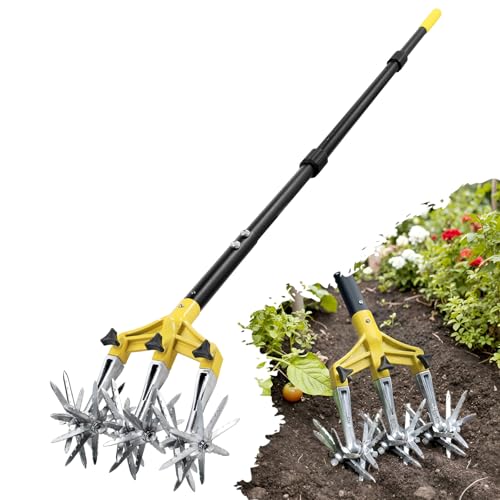
Tempered spring steel gives this rotary cultivator its edge, resisting bending and deformation under heavy pushing. Multi-angled serrated star wheels bite into compacted clay and rocky ground, loosening dirt and mixing in fertilizer as you roll. The handle extends to 66 inches across four detachable stainless sections, so you tune length for comfort or compact storage. A rust-resistant powder coating and ergonomic rubber grip round out a tool built for repeat seasons. One honest note, the maker advises removing larger rocks and lightly watering hard soil first, so it is not a set-and-forget fix on truly dry, stony beds.
Tine materialTempered spring steel
Handle lengthUp to 66 inches
Handle sections4 detachable
FinishRust-resistant powder coat
Pros
- Spring steel tines resist bending under pressure
- Adjustable four-section handle stores compactly
- Handles clay and rocky ground when prepped
Cons
- Hard, dry soil needs watering first
- Rocks should be cleared before use
Check price on Amazon ›
A heavy-duty all-metal head sets this cultivator apart, with forged star-shaped tines that reach up to 2.4 inches deep. The long 74-inch adjustable handle lets you work upright, and the angled connection turns downward force into forward rolling power to spare your wrists and back. Three removable rotary wheels adapt the working width for narrow rows or careful passes near plants. Reviewers note the balanced structure eases the push-and-pull motion, cutting fatigue across bigger beds. Keep expectations grounded though, the maker warns against extremely hard or rocky soil, so save it for topsoil, aeration, and reseeding rather than breaking stony new ground.
Head materialAll-metal, forged tines
Tine depthUp to 2.4 inches
Handle length74 inches, adjustable
Rotary wheels3 removable
Pros
- Long handle suits taller users upright
- Forged tines dig deep into topsoil
- Removable wheels adjust working width
Cons
- Not made for rocky ground
- Deep-set clay may need pre-loosening
Check price on Amazon ›
Lightweight aluminum tines keep this rotary tiller easy to swing while still loosening soil and reseeding lawns. Stainless steel poles handle four adjustable sections, so you set a comfortable working length and break it down for storage. Three interchangeable blade wheels let you tune the cut for cultivating or weed removal, and a tool-free knob secures the spike attachment fast. A soft anti-slip grip helps control during longer passes. Be realistic about limits, the maker specifically cautions against extremely hard or rocky soil, since that overstresses the connection, and owners are told to inspect and tighten screws after use to keep everything secure.
Tine materialAnti-rust aluminum
Handle materialStainless steel
Handle sections4, adjustable
Blade wheels3 interchangeable
Pros
- Light aluminum tines swing easily
- Tool-free knob speeds assembly
- Interchangeable wheels for cultivating or weeding
Cons
- Avoid hard or rocky soil
- Screws need periodic retightening
Check price on Amazon ›
For hands-on work up close, this Fiskars hand cultivator brings a cast-aluminum head and sharp tines suited to digging in tough soil, aerating, and pulling weeds. Polished aluminum resists rust and stays sharp through heavy use, and the ergonomic handle gives control while easing fatigue. A hang hole makes storage simple, and Fiskars backs the tool with a lifetime warranty that speaks to its build. Reviewers praise the balance and grip for detailed bed and container work. The trade-off is scope, this is a short hand tool, not a rolling tiller, so large plots and wide passes call for a long-handled model instead.
Head materialCast aluminum
Tine finishPolished aluminum
HandleErgonomic, hang hole
WarrantyLifetime
Pros
- Cast-aluminum head resists rust
- Ergonomic grip reduces hand fatigue
- Backed by lifetime warranty
Cons
- Short reach, not for large plots
- Single-hand tool limits coverage speed
Check price on Amazon ›
A long-running name in rolling cultivators, the Garden Weasel uses rotating blade wheels to aerate, prepare, and maintain soil for planting or reseeding. It combines hoe and spade tasks in one 2-in-1 design, breaking apart soil as you push and pull. The maker points to premium materials built for decades of reliable use, and it is designed and assembled in the USA with a no-hassle lifetime guarantee against defects. Owners lean on that reputation and responsive US-based support. One caveat, the listing leans on brand heritage rather than detailed specs like handle length, so confirm the reach and configuration match your beds before buying.
Design2-in-1 rotary tiller
Assembly originUSA
GuaranteeLifetime against defects
ActionRotating blade wheels
Pros
- Proven, long-selling rotary design
- Combines hoe and spade tasks
- Lifetime defect guarantee, US support
Cons
- Listing light on exact specs
- Confirm handle reach before buying
Check price on Amazon ›
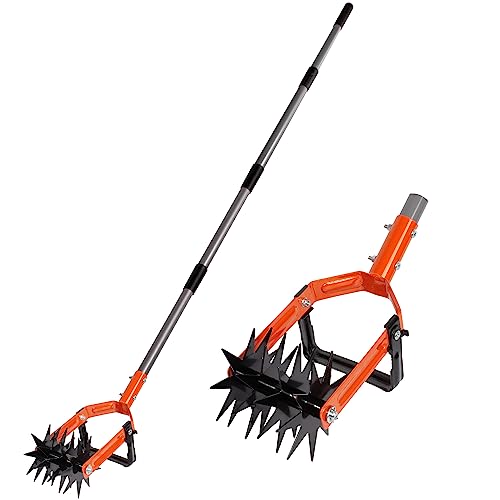
Colwelt aims this rotary cultivator at turning clumpy dirt into fluffy, ready-to-plant seedbeds. Six serrated tines cultivate the top 1.5 inches, breaking compacted soil and weeding between rows, while three detachable wheels let you run one, two, or all three for tight spaces or careful passes near plants. A reinforced aluminum head and aluminum tines resist rust and cracking where flimsy plastic frames fail. The 61-inch handle sets an ergonomic height for rolling back and forth with light downward pressure. Keep it in scope, its shallow 1.5-inch working depth suits seedbed prep and aeration more than breaking deep, heavily compacted new ground.
Tine count6 serrated
Working depthTop 1.5 inches
Head materialReinforced aluminum
Handle length61 inches
Pros
- Creates fine, plantable seedbeds
- Three wheels adjust for tight spaces
- Rust-resistant aluminum head and tines
Cons
- Shallow 1.5-inch working depth
- Better for prep than deep digging
Check price on Amazon ›
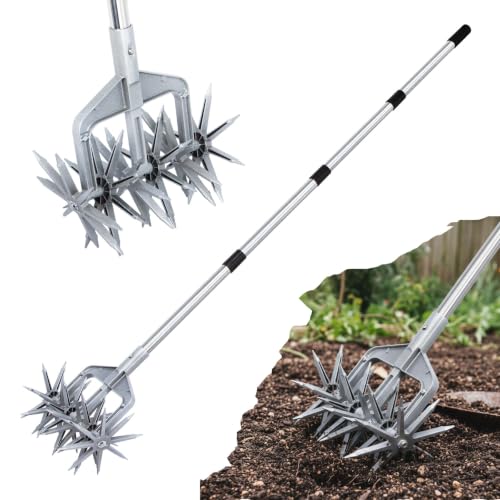
Six aluminum-alloy wheels form the star-shaped head here, and the center wheels pop off to convert this into a short-handle tiller for tighter spaces. The stainless handle locks at three lengths, 34, 46, and 58 inches, so you match it to your height and skip the back strain. A non-slip ergonomic grip suits longer sessions, and the alloy tines are pitched as rust-proof and hard to bend through heavy use. Owners like rolling it back and forth around rows or across open soil. Worth noting, the top length tops out near 58 inches, so very tall gardeners may still find themselves stooping a little on wide passes.
Wheel count6 aluminum alloy
Handle lengths34, 46, 58 inches
Handle materialStainless steel
ConvertibleRemovable center wheels
Pros
- Converts to short-handle tiller
- Three set handle lengths
- Rust-proof aluminum-alloy tines
Cons
- Max length near 58 inches
- Very tall users may still stoop
Check price on Amazon ›
This four-tine cultivator goes the rugged route with a one-piece forged high carbon steel head that resists deformation under pressure. The head and handle join with two rivets for a connection built to stay put during hard use, and the thickened fiberglass handle adds stability while lowering the risk of breakage. Two non-slip grips turn sticky when wet for a firm hold, and the 58-inch length at 2.6 pounds eases waist strain over long sessions. It loosens, tills, weeds, and works in fertilizer well. The limitation is style, this is a fixed-tine cultivator you pull through soil, not a rolling rotary head, so it takes more arm effort across big beds.
Head materialForged high carbon steel
Handle materialFiberglass
Total length58 inches
Weight2.6 pounds
Pros
- One-piece forged steel head
- Riveted joint resists loosening
- Grippy handle, comfortable weight
Cons
- Fixed tines need more arm effort
- No rolling action for wide beds
Check price on Amazon ›
Three thick, deeply curved claws let this compact hand tool penetrate soil for aeration, loosening, digging, and weeding in close quarters. Thickened aluminum alloy at 0.28 inch keeps the claw sturdy and slow to break, so it digs into hard turf without flexing. An ergonomic rubber TPR grip cuts hand and wrist fatigue while you work, and a hang hole with room for a rope makes storage tidy. Lightweight and compact, it slips into a garden bag for transplanting and edge work. Just size your expectations, this is a short-handled claw for detail tasks, so wide plots and standing tilling still need a long-handle cultivator.
Claw count3 curved
MaterialAluminum alloy, 0.28 inch
GripNon-slip TPR rubber
StorageHang hole for rope
Pros
- Deep curved claws penetrate hard turf
- Comfortable non-slip TPR grip
- Compact and easy to store
Cons
- Short handle means bending down
- Not for large-plot tilling
Check price on Amazon ›
This tool pairs a rotary cultivator with a stirrup-style weeder for two jobs in one handle. Four interlocking star wheels, each with nine sharp teeth, loosen soil, mix dirt, and improve aeration for planting or lawn repair. A manganese steel weeding blade with an adjustable angle cuts, digs, edges, and lifts weeds by the roots around beds, rows, and sidewalks. The detachable stainless pole adjusts to different working heights to cut bending, and a non-slip grip aids control. Set expectations by soil, the maker notes the star teeth work best on moist or lightly compacted ground, so very hard, dry, or rocky soil should be watered or pre-loosened first.
Star wheels4, 9 teeth each
Weeder bladeManganese steel, angled
Pole materialStainless steel, adjustable
GripNon-slip
Pros
- Cultivator and weeder in one
- Adjustable-angle blade removes roots
- Height-adjustable pole cuts bending
Cons
- Star teeth need moist soil
- Hard, dry ground must be prepped
Check price on Amazon ›
What to look for
Match the tool to your soil
Hard, compacted, or clay beds reward forged or spring steel tines that resist bending, while loose seedbeds do fine with lighter aluminum heads. If your ground is stony or bone dry, most rotary models ask you to clear rocks and water first, so plan for prep rather than raw muscle.
Rotary versus fixed-tine and hand tools
Rotary cultivators roll star wheels through soil with a push-and-pull motion that eases arm strain across beds. Fixed-tine cultivators pull through the ground and demand more effort but grip tough turf well. Hand claws and short tools shine for close weeding, containers, and detail work where a long handle gets in the way.
Handle length and comfort
Adjustable handles let taller and shorter gardeners work upright and spare the back. Look for multi-section poles that break down for storage, and note the maximum length, since some top out near 58 inches. An angled head that turns downward force into forward roll further reduces wrist and arm fatigue on longer sessions.
Adjustable wheels and maintenance
Detachable rotary wheels let you narrow the working width for tight rows or careful passes near roots, and some convert to a short-handle tiller. Whatever you choose, clean soil and debris off the tines after each use and dry them to hold off rust, and periodically check that screws and connections stay tight.
Frequently asked questions
What is a garden cultivator used for?
A cultivator loosens and aerates soil, mixes in compost or fertilizer, breaks up compacted ground, and removes weeds. Rotary models roll through beds to prepare seedbeds, while hand tools handle close weeding and transplanting.
Rotary cultivator or fixed-tine, which should I pick?
Rotary cultivators roll star wheels with a push-and-pull motion that eases strain over larger beds. Fixed-tine tools pull through soil and grip tough turf but take more arm effort. Choose by plot size and how much rolling motion you want.
Can these cultivators handle hard or rocky soil?
Most rotary models are not built for extremely hard or rocky ground. Makers advise watering or pre-loosening dry soil and clearing larger rocks first. Steel-tined tools like spring steel or forged heads cope better with compacted clay.
What handle length works best?
Adjustable handles let you work upright and reduce back strain. Taller gardeners benefit from longer options near 74 inches, while many models set at three lengths up to about 58 inches. Multi-section poles also break down for easier storage.
Are aluminum tines strong enough?
Aluminum-alloy tines are light, rust-resistant, and hold up well for seedbed prep, aeration, and reseeding. For breaking new or heavily compacted ground, forged or spring steel tines resist bending better under heavy pressure.
Do I need a rolling tiller or a hand cultivator?
Long-handled rolling tillers suit wide beds and standing work. Short hand claws and cultivators are made for containers, tight beds, and detailed weeding. Many gardeners keep one of each for full coverage.
How do I keep a cultivator from rusting?
Remove soil and debris from the tines after every use, rinse, and dry thoroughly before storage. Rust-resistant coatings and aluminum or stainless parts help, but drying is what protects the metal long term.
Can a cultivator remove weeds along with tilling?
Yes. Star wheels lift weeds as they loosen soil, and some tools add a dedicated stirrup or angled blade to cut and dig out roots around beds, rows, and edges for combined tilling and weeding.
The verdict
CKLT 66in Rotary Cultivator with Tempered...
9.2/10
For most gardeners, the CKLT 66-inch earns Best Overall with tough spring steel tines and a long adjustable handle for compacted beds. Taller users should look at the 74-inch BlumeTrec, while the Fiskars Ergo hand tool wins close detail work. Choose the VNIMTI for rugged fixed-tine durability, the Colwelt for fluffy seedbeds, or the 3-claw hand rake for tight spaces. Match tine material and handle length to your soil and reach.
Check price on Amazon ›
Our top pick, secure checkout via Amazon
Note: Availability and specifications change often. Always confirm the current details on Amazon before buying.