Juicers 7 Beginner Juicers for Fresh Juice, Easy Cleanup
P
By the Pickpedia Team
·7 picks compared
·Last verified September 2026
Affiliate disclosure: As an Amazon Associate, Pickpedia earns from qualifying purchases. Links on this page are paid links, and we may earn a commission at no extra cost to you. This never affects our picks or scores.
Quick answer
Beginners usually do best with a wide-chute centrifugal machine for speed or a slow cold press for smoother, low-foam juice. Pick centrifugal if you want quick results with minimal chopping. Choose masticating if quiet operation and higher yield matter more than raw speed.
7 Beginner Juicers for Fresh Juice, Easy Cleanup at a glance
Why you can trust this guide
We compared these picks using verified manufacturer specifications, available manuals and documentation, current retailer listings, and patterns in owner feedback, alongside editorial research. We focus on measurable differences such as performance, capacity, usability, and build quality. Pickpedia does not present editorial research as laboratory testing, and we do not claim hands-on testing unless it was actually performed.
How we chose: We compared seven beginner juicers across chute width, cleanup effort, motor type, noise, and how forgiving each is for first-time users.
Starting to juice at home should feel simple, not like a chore. Most newcomers get frustrated by two things: constant chopping and messy cleanup. A wide feed chute solves the first, and detachable dishwasher-safe parts handle the second.
This roundup splits the field into fast centrifugal machines and slower cold press models. Centrifugal units work quickly and suit busy mornings. Cold press juicers run quietly and pull more from leafy greens, though they ask for a little patience during setup.
Our top picks
Based on specifications, this centrifugal juicer leans on an 800W motor and a 3 inch wide mouth, so whole soft produce goes in without much prep. Two speeds let you drop to low for oranges and strawberries, then step up for carrots, apple, and celery. A locking safety arm keeps it from running unless the cover seats correctly, and overload protection shuts it off if things overheat. Detachable parts make rinsing straightforward. One honest limitation: the maker warns against juicing items with low water content, so it favors watery fruits and firm vegetables over dry ingredients.
Motor800W
Speeds2 (low and high)
Feed chute3 inch wide mouth
SafetyLocking arm and overload cutoff
Pros
- Wide mouth reduces chopping
- Dual speeds for soft and hard produce
- Safety lock and overheat protection
Cons
- Struggles with low water content foods
- Centrifugal action adds some foam
Check price on Amazon ›
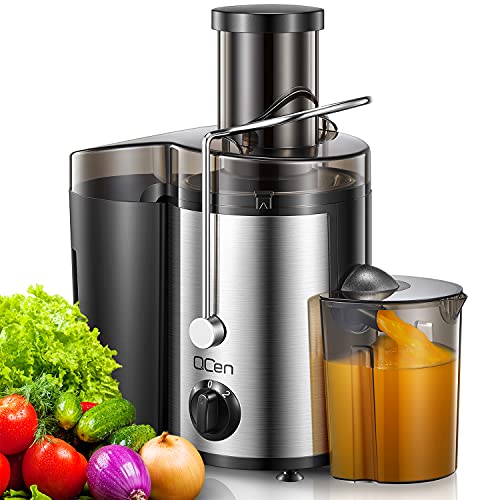
QCen keeps the formula familiar with a 500W motor spinning between 12000 and 18000 RPM across two speeds. Low handles watermelon, orange, and strawberry, while high tackles carrot, apple, and pear. Its 3 inch wide mouth cuts prep time, so you skip most slicing. Reviewers note the same locking arm found on pricier centrifugal models, plus overload protection that switches the machine off during overheating. Detachable parts lift out for easy rinsing. As a limitation, the guidance still warns against low water content ingredients, and the lighter motor sits a step below higher wattage rivals for the toughest, most fibrous produce.
Motor500W
Speed range12000 to 18000 RPM
Speeds2 settings
Feed chute3 inch wide
Pros
- Wide chute limits chopping
- Clear low and high speed choices
- Overload and lock safeguards
Cons
- Lower wattage than top pick
- Not suited to dry ingredients
Check price on Amazon ›
EanOruus stretches beyond plain juicing with two interchangeable strainers for juice or frozen fruit sorbet, plus nut milk. A 6.5 inch mega wide chute swallows whole apples and oranges, and the 100 ounce hopper holds enough for a family gathering or several days of prep. Owners report the high torque brushless AC motor pushes through fibrous ingredients without stalling. Detachable parts, including a pulp outlet, lift off for cleaning. The premium gray finish suits modern counters. Its main limitation is footprint: that oversized hopper and wide chute make it a larger machine, so cramped kitchens may find it demanding on counter space.
DesignCold press, 3-in-1
Chute6.5 inch wide
Hopper100 ounce capacity
MotorBrushless AC, high torque
Pros
- Juice, sorbet, and nut milk modes
- Very wide chute for whole produce
- Large hopper suits batch prep
Cons
- Bigger footprint on the counter
- More parts to store than mini units
Check price on Amazon ›
Ninja built this masticating juicer around a 150 watt high torque motor that turns the auger slowly for cold press juice with less foam. Two interchangeable pulp filters let you pick less pulp or lots of pulp, and simple Start/Stop plus Reverse programs help clear jams. Reviewers note the compact body tucks under cabinets, so it fits small kitchens and apartments. A built-in anti-drip lever keeps pours clean between glasses. The trade off is throughput: a narrower masticating design means you feed produce in smaller amounts and at a slower pace than a wide-mouth centrifugal machine, which suits patience over speed.
Motor150 watt high torque
TypeMasticating cold press
Pulp filters2 (less or lots)
ProgramsStart/Stop and Reverse
Pros
- Compact, fits under cabinets
- Adjustable pulp control
- Reverse and anti-drip reduce mess
Cons
- Slower feeding than centrifugal
- Smaller jug limits big batches
Check price on Amazon ›
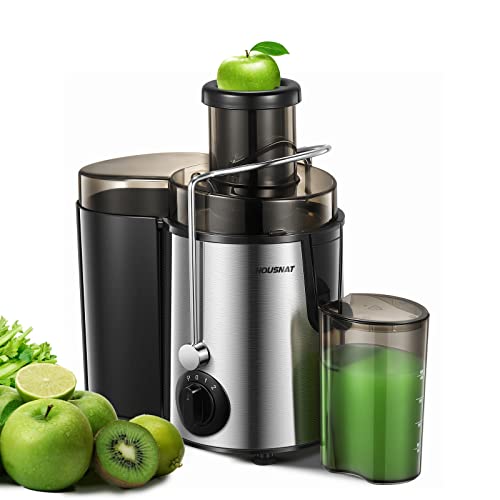
HOUSNAT pairs a 400W motor with a 65mm feed chute, so hard items like carrots and beetroot need little prep. Three speeds plus a Pulse setting let you match the ingredient, dropping low for oranges and tomato, then boosting to clear tough produce. According to the maker, a 304 stainless steel filter and anti-corrosion blades extract more juice and vitamins for drier pulp. Detachable BPA-free parts go on the top dishwasher rack, and a 1.6 liter pulp collector cuts trips to the bin. The honest catch: it is built for light to moderate use, roughly four to five sessions weekly, and needs a cooldown if the motor overheats.
Motor400W
Speeds3 plus Pulse
Filter304 stainless steel
Pulp collector1.6 liter
Pros
- Pulse clears stubborn produce
- Large pulp bin fewer empties
- Dishwasher-safe detachable parts
Cons
- Rated for light to moderate use
- Needs cooldown if it overheats
Check price on Amazon ›
Godspeeds runs its auger at just 58 RPM to crush and squeeze produce slowly, which limits heat and oxidation. That low speed, per the maker, reaches up to 99 percent juice yield while trimming pulp waste from fruits, vegetables, and leafy greens. A 6 inch wide chute fits whole apples, oranges, and cucumbers, so prep stays minimal. Its 300W motor holds steady torque yet keeps noise under 58 dB for quiet mornings. Assembly takes three steps, and the toothed filter rinses clean. One limitation to weigh: slow cold press extraction naturally works at a gentler pace, so a full pitcher takes longer than a fast centrifugal unit.
Auger speed58 RPM
Chute6 inch wide
Motor300W, under 58 dB
Warranty10 year
Pros
- High yield with drier pulp
- Whole-fruit chute cuts prep
- Quiet slow-press operation
Cons
- Slower than centrifugal juicers
- Cold press asks for patience
Check price on Amazon ›
Elite Gourmet keeps things small with a single-serve cold press juicer sized for one to two servings and a 16 ounce cup. A slow 70 RPM masticating action yields smooth juice with less foam and oxidation than high-speed centrifugal machines. Only three removable parts come apart for cleanup, and they sit on the top dishwasher rack. Built-in overload and overheat protection guard against damage during use, backed by a brand with decades of kitchen experience. The clear limitation is scale: a 3/4 inch feed chute means you cut produce smaller, and this mini unit is not meant for large batches or filling several bottles.
Capacity16 oz single-serve
Speed70 RPM masticating
Parts3 removable
ProtectionOverload and overheat
Pros
- Compact single-serve footprint
- Smooth low-foam cold press juice
- Only three parts to clean
Cons
- Small chute needs more cutting
- Not built for large batches
Check price on Amazon ›
What to look for
Centrifugal versus cold press
Centrifugal juicers spin fast, so they finish quickly and shine for busy mornings. Cold press models grind slowly, keeping foam and heat down while pulling more from leafy greens. Beginners who value speed lean centrifugal, and those who prize smoothness and yield choose cold press.
Why chute width matters
A wider feed chute means less chopping before you juice. Machines with a 6 inch mouth accept whole apples and oranges, while narrow openings ask you to cut produce into smaller pieces. If prep time frustrates you, prioritize chute size.
Cleanup and daily habit
The juicer you clean easily is the one you keep using. Look for detachable, dishwasher-safe parts and a low part count. A cleaning brush helps clear mesh filters, and an anti-drip feature keeps counters tidy between pours.
Matching capacity to your household
Solo drinkers do well with a compact single-serve unit, while families benefit from a large hopper and bigger jug. Think about how much you juice in one session, then match capacity so you refill less and prep once for several days.
Frequently asked questions
Which juicer type is best for a total beginner?
Both work, but centrifugal machines are the most forgiving for first timers because they run fast and accept wide produce. If quiet operation and higher yield matter more, a slow cold press model is a strong starting point.
Do I still have to chop fruit with a wide chute?
Much less. A 6 inch or wide-mouth chute fits whole apples, oranges, and cucumbers, so prep drops sharply. Narrow chutes, like a 3/4 inch opening, still require cutting produce into smaller pieces first.
Why does my juice have so much foam?
Foam comes mainly from fast centrifugal spinning, which whips air into the juice. Cold press masticating machines run slowly and produce noticeably less foam, and some centrifugal models include a foam separator to help.
How hard are these juicers to clean?
Most here use detachable parts that rinse quickly, and several are top-rack dishwasher safe. Compact units with only three removable pieces are quickest. A cleaning brush is useful for clearing pulp from mesh filters.
Can beginner juicers handle leafy greens?
Cold press masticating juicers handle greens like celery and leafy vegetables better because they crush and squeeze slowly. Centrifugal machines can juice greens too, though yield from very fibrous leaves is usually lower.
How long can I run a juicer at once?
Read the maker guidance. Some models are rated for light to moderate use, around four to five sessions weekly, and need a short cooldown if the motor overheats. Overload protection helps by switching the machine off automatically.
What size juicer fits a small kitchen?
Compact cold press units and space-saving designs that tuck under cabinets suit apartments and tight counters. Larger machines with big hoppers give more capacity but take more room, so match the footprint to your space.
Are cold press juicers worth the slower speed?
If you want higher yield, drier pulp, and less oxidation, yes. Cold press models trade speed for smoother juice and quieter operation. Beginners who juice mainly in the morning rush may prefer a faster centrifugal option instead.
The verdict
800W Centrifugal Juicer with Wide Mouth Fe...
9.1/10
For most beginners, the 800W centrifugal juicer is our top pick, blending a wide mouth and dual speeds for fast, low-prep juice. Small kitchens should look at the Ninja NeverClog for compact, clog-free cold press. Families juicing in bulk suit the EanOruus, while solo drinkers fit the Elite Gourmet mini. Choose centrifugal for speed and cold press for smoother, higher-yield juice, then pick the capacity that matches how often you drink.
Check price on Amazon ›
Our top pick, secure checkout via Amazon
Note: Availability and specifications change often. Always confirm the current details on Amazon before buying.