Knives & Knife Sets 8 Santoku Knives for Fast, Balanced Chopping
P
By the Pickpedia Team
·8 picks compared
·Last verified September 2026
Affiliate disclosure: As an Amazon Associate, Pickpedia earns from qualifying purchases. Links on this page are paid links, and we may earn a commission at no extra cost to you. This never affects our picks or scores.
Quick answer
Pick a santoku that fits your grip and your prep style. A high carbon stainless blade around seven inches suits most cooks, while a five inch model works for smaller hands. Match handle comfort, edge angle, and care routine to how often you chop, and the knife will feel natural fast.
8 Santoku Knives for Fast, Balanced Chopping at a glance
Why you can trust this guide
We compared these picks using verified manufacturer specifications, available manuals and documentation, current retailer listings, and patterns in owner feedback, alongside editorial research. We focus on measurable differences such as performance, capacity, usability, and build quality. Pickpedia does not present editorial research as laboratory testing, and we do not claim hands-on testing unless it was actually performed.
How we chose: We lined up eight santoku knives and weighed edge geometry, steel, handle comfort, and honest owner feedback across listings.
A santoku earns its keep on daily chopping, dicing, and mincing, so the blade you reach for should feel balanced and stay keen. These eight cover forged German steel, laminated Japanese cores, and grippy synthetic handles, giving you real range across kitchen styles.
We grounded every note in stated specifications and what reviewers repeatedly mention. Nobody here was tested in a lab by us, so treat scores as editorial judgement and read each limitation before you commit.
Our top picks
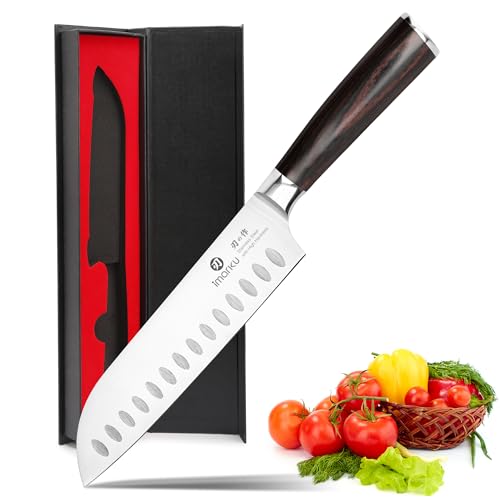
Built from Japanese high carbon stainless steel, this seven inch imarku resists rust and discoloration while handling meat, vegetables, fruit, and bread. Its edge runs 15 to 18 degrees per side over a 2.5mm spine, which reviewers describe as keen and steady through daily prep. Scalloped hollow indentations add gaps that keep slices from clinging to the blade. A Pakkawood handle is shaped to ease wrist tension and hold a secure grip when wet. One limitation: imarku notes a brand refresh, so packaging and markings may vary from listing photos even though construction stays the same.
Blade length7 inches
SteelJapanese high carbon stainless
Edge angle15 to 18 degrees per side
HandlePakkawood
Pros
- Rust resistant high carbon steel
- Hollow edge reduces food sticking
- Comfortable stabilized Pakkawood handle
Cons
- Packaging varies during brand refresh
- Hand care recommended for longevity
Check price on Amazon ›
HOSHANHO forges this seven inch santoku from triple layer laminated 10Cr15CoMoV Japanese steel, rated around 62HRC with roughly 0.9 percent carbon. That hardness, per the listing, helps the hand sharpened 15 degree edge hold longer through repeated prep. A frosted finish and double sided grooves aim to cut resistance and stop food from sticking. The African Pakkawood handle is contoured for comfort and resists cracking from thermal expansion. Owners note the harder steel takes patience to resharpen once dull, so a decent stone and steady technique matter more here than with softer everyday blades.
Blade length7 inches
Steel10Cr15CoMoV triple layer
Hardness62HRC
HandleAfrican Pakkawood
Pros
- Hard steel holds its edge
- Grooved blade limits sticking
- Crack resistant Pakkawood handle
Cons
- Harder steel is tougher to resharpen
- Frosted finish shows wear over time
Check price on Amazon ›
This Henckels Solution pairing gives you a 5.5 inch and a 7 inch santoku, so you can match blade size to the job. German engineering, drawing on the brand's long cutlery history, delivers a razor start and stain resistant blades. Reviewers highlight lightweight handling and paper thin cuts with little effort, plus dishwasher friendly cleanup. Both blades stay sharper longer with minimal care, according to the maker. One honest caveat: two santokus and no other knife shapes means this set complements rather than replaces a fuller block, so you will still want a paring or bread knife alongside it.
Set5.5 inch and 7 inch
OriginGerman engineered
CleanupDishwasher safe
BladeStain and rust free
Pros
- Two useful santoku sizes
- Lightweight and easy to handle
- Dishwasher friendly cleanup
Cons
- No other knife shapes included
- Both blades share one style
Check price on Amazon ›
Cuisinart keeps this seven inch santoku refreshingly simple, pairing a high quality stainless steel blade with a matching guard for safe storage. It covers the core santoku jobs of chopping, dicing, and mincing without fuss, which makes it approachable for someone building a first drawer of tools. The included cover protects the edge and keeps things tidy between uses. Because the listing shares few technical details, expect a straightforward everyday performer rather than a specialized blade. Serious cooks chasing a precise edge angle or premium steel spec will find the description light, so set expectations toward reliable basics.
Blade length7 inches
SteelStainless steel
IncludedBlade guard
UseChop, dice, mince
Pros
- Simple, approachable everyday knife
- Blade guard for safe storage
- Handles core santoku tasks
Cons
- Few published technical specs
- Basic rather than specialized
Check price on Amazon ›
A longtime favorite among home cooks and professionals, this Victorinox Fibrox Pro carries a tapered, laser tested stainless edge that chops, minces, and slices with ease. Its thermoplastic Elastomer handle grips securely even when wet, and the blade sits weighted and balanced for comfortable handling. Swiss crafted and dishwasher safe, it backs a lifetime guarantee against material and workmanship defects. Worth noting, this is technically an eight inch chef's knife rather than a true santoku profile, so if you specifically want the flatter santoku belly and shorter reach, look to the dedicated santoku models on this list instead.
Blade lengthAbout 8 inches
SteelTapered stainless
HandleTPE non slip
CareDishwasher safe
Pros
- Secure grip when hands are wet
- Balanced, easy to control
- Lifetime defect guarantee
Cons
- Chef profile, not a true santoku
- Longer reach than most santokus
Check price on Amazon ›
Mercer's Genesis santoku is precision forged from high carbon German steel with a taper ground edge, a combination the maker links to durability and long lasting sharpness. The ergonomic handle offers a non slip grip even with wet hands, which reviewers appreciate during longer prep sessions. It shines at dicing onions, mincing shallots, chopping herbs, crushing garlic, and shredding cabbage. This is a genuine workhorse for professional and enthusiast kitchens alike. The clear limitation is care: Mercer advises hand washing and drying, and warns against the dishwasher or long soaking, so it asks a little more maintenance discipline than fully dishwasher safe rivals.
Blade length7 inches
SteelHigh carbon German, forged
EdgeTaper ground
CareHand wash only
Pros
- Precision forged for durability
- Secure non slip grip
- Excellent at fine mincing
Cons
- Hand wash and dry required
- Not suited to dishwasher use
Check price on Amazon ›
Farberware's five inch EdgeKeeper suits everyday prep with oval indentations that keep food from sticking through slicing, dicing, and mincing. Its standout feature is the sheath: a built in sharpener hones the high carbon stainless edge each time you insert or remove the knife, so it stays keen without separate tools. An ergonomically contoured handle reduces fatigue, and the cover keeps a drawer organized safely. The tradeoff is size and system: five inches gives less reach for large produce, and the automatic honing sheath maintains an edge but does not replace occasional proper sharpening once the blade genuinely dulls with heavy use.
Blade length5 inches
SteelHigh carbon stainless
FeatureSelf honing sheath
CareHand wash
Pros
- Sheath hones edge automatically
- Compact for small kitchens
- Indentations reduce sticking
Cons
- Short reach for large produce
- Honing does not replace real sharpening
Check price on Amazon ›
Wusthof's Classic santoku is forged from a single piece of durable high carbon stainless steel, with a full tang and full bolster that add stability and safety as you work. The fine seven inch blade slices wafer thin pieces and handles dicing and chopping with precision. Triple riveted handles anchor the brand's best selling series, made in Solingen by a family firm with generations of blade craft behind it. Reviewers praise the balance and keen factory edge. The main limitation is care, since Wusthof specifies hand wash only, so anyone hoping to toss it in the dishwasher should look elsewhere.
Blade length7 inches
ConstructionForged, full tang
SteelHigh carbon stainless
CareHand wash only
Pros
- Forged full tang stability
- Keen edge for thin slicing
- Long standing craftsmanship
Cons
- Hand wash only
- A serious investment blade
Check price on Amazon ›
What to look for
Why blade length matters
Seven inches is the santoku sweet spot, long enough for most produce yet nimble for detailed work. A five inch blade suits small hands and tight counters, while an eight inch chef style gives extra reach. Pick the length that matches your board size and the volume you prep most days.
Steel and edge geometry
High carbon stainless steel balances sharpness with rust resistance, which is why it appears across these picks. A narrower edge angle near 15 degrees slices thinner, while harder steel rated around 62HRC holds that edge longer but takes more effort to restore. Match hardness to your willingness to sharpen.
Handle comfort and safety
You hold a santoku far more than you look at it, so grip decides comfort. Pakkawood resists cracking and stays sanitary, while textured synthetic handles keep traction when hands turn wet. A full tang and bolster add heft and balance that steady your cuts during longer sessions.
Care and longevity
Many forged blades ask for hand washing and prompt drying to protect the edge and finish. Some stainless models tolerate the dishwasher, and a few include self honing sheaths that maintain sharpness between real sharpenings. Read the maker's care notes, since ignoring them shortens the working life of any knife.
Frequently asked questions
What is a santoku knife used for?
A santoku handles chopping, slicing, dicing, and mincing across vegetables, fruit, meat, and more. Its flatter belly favors an up and down chopping motion rather than the rocking used with a curved chef's knife.
Is a santoku better than a chef's knife?
Neither wins outright. Santokus shine at precise, thin cuts and quick chopping, while a longer chef's knife offers more reach and rocking room. Many cooks keep both and reach for whichever fits the task.
What size santoku should I buy?
Seven inches suits most kitchens and hand sizes. Choose five inches for small hands, tight storage, or lighter prep, and consider a longer blade only if you routinely break down large produce.
Are hollow edge grooves worth it?
The scalloped indentations create small air gaps that reduce suction, helping slices release instead of clinging. Several picks here use them, and reviewers find they genuinely cut down on sticking during slicing and dicing.
How do I keep a santoku sharp?
Hone regularly and sharpen on a stone when the edge dulls. Harder steels hold longer but resist resharpening, and self honing sheaths help between sessions. Avoid glass or stone boards, which dull edges quickly.
Can I put a santoku in the dishwasher?
Some stainless models are dishwasher safe, but many forged blades specify hand wash only. Washing and drying by hand protects both the edge and the handle, so always check the maker's care guidance first.
Which steel is best for a santoku?
High carbon stainless steel balances a keen edge with rust resistance, making it a dependable choice. Laminated Japanese cores can reach higher hardness for longer edge retention, while forged German steel favors durability and easier upkeep.
Is a two piece santoku set worth it?
A set with two blade sizes covers both large and fine prep, which many cooks find handy. Just remember it complements rather than replaces a full kit, so keep a paring and bread knife nearby.
The verdict
imarku Santoku Knife 7 Inch
9.1/10
For most kitchens the imarku seven inch is our top all round pick, keen and comfortable for daily prep. Choose the Wusthof Classic if you want a forged lifetime blade, the HOSHANHO for hard, edge holding steel, and the Farberware five inch for small spaces or hands off sharpening. The Henckels set suits those wanting two sizes, while Victorinox and Mercer reward cooks who prep with wet hands. Match handle and care habits to your routine.
Check price on Amazon ›
Our top pick, secure checkout via Amazon
Note: Availability and specifications change often. Always confirm the current details on Amazon before buying.