Tools & DIY 6 Sump Pumps for Reliable Basement Protection
P
By the Pickpedia Team
·6 picks compared
·Last verified September 2026
Affiliate disclosure: As an Amazon Associate, Pickpedia earns from qualifying purchases. Links on this page are paid links, and we may earn a commission at no extra cost to you. This never affects our picks or scores.
Quick answer
Match the pump to your job. A 1 HP submersible clears flooded basements and window wells fast, while a 1/3 HP cast iron model runs quietly for permanent pit duty. Choose lower horsepower utility or pool cover pumps for shallow, occasional draining rather than heavy storm water.
6 Sump Pumps for Reliable Basement Protection at a glance
Why you can trust this guide
We compared these picks using verified manufacturer specifications, available manuals and documentation, current retailer listings, and patterns in owner feedback, alongside editorial research. We focus on measurable differences such as performance, capacity, usability, and build quality. Pickpedia does not present editorial research as laboratory testing, and we do not claim hands-on testing unless it was actually performed.
How we chose: Six submersible pumps compared across horsepower, flow rate, lift height, housing material, and how well each handles debris and dry running.
Basement flooding rarely gives warning, so a dependable sump pump earns its keep the first time a storm rolls through. Picking one means weighing raw flow against lift height, then matching housing material to how hard the pump will actually work.
This roundup covers heavy hitters that move thousands of gallons per hour alongside quieter permanent-pit pumps and lighter utility models for shallow draining. Every claim below leans on manufacturer specifications and what owners report, so you can weigh trade-offs honestly before committing to one.
Our top picks
AQUASTRONG pairs a 1 HP motor with a rated 4500 GPH flow, about 75 gallons a minute at five feet, and lifts water up to 30 feet vertically. Its bottom suction design pulls water down to roughly a fifth of an inch and handles solids up to that size, which suits flooded basements and hot tubs. The reinforced thermoplastic casing resists corrosion, and a built-in thermal overload protector guards the motor during dry running. Multiple adapters and a 10-foot cord ease setup. One limitation: the thermoplastic housing feels less rugged than cast iron for permanent pit installs.
Motor1 HP
Flow rate4500 GPH
Max lift30 ft
HousingReinforced thermoplastic
Pros
- Strong flow and high vertical lift
- Bottom suction drains near the surface
- Thermal overload protects during dry runs
Cons
- Plastic housing less rugged than cast iron
- Handles only small solids up to a fifth of an inch
Check price on Amazon ›
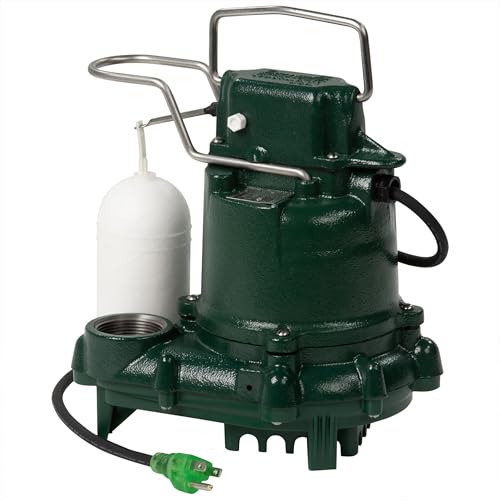
Zoeller's M53 runs on a 1/3 HP motor and switches on automatically through a float-activated mechanism, so it cycles without you watching it. Reviewers point to its cast iron switch case, motor, and pump housing as the reason it holds up over years of pit duty. A non-clogging vortex impeller lets debris pass rather than jamming the intake, which matters in dirtier sumps. The plastic base keeps weight down where it helps. One trade-off: at 1/3 HP its flow and lift trail the 1 HP utility models here, so it favors steady pit work over rapid bulk draining.
Motor1/3 HP
SwitchFloat activated, automatic
ImpellerNon-clogging vortex
HousingCast iron
Pros
- Cast iron build resists wear
- Automatic float switch cycles on its own
- Vortex impeller shrugs off debris
Cons
- Lower flow than 1 HP rivals
- Heavier than thermoplastic pumps
Check price on Amazon ›
WAYNE's CDU790 is an indoor pump that moves up to 4600 GPH from a 1/3 HP motor, holding basements dry through rain and melting snow. Its top suction design eliminates air lock and cuts clogging from debris settling at the bottom of the pit. The epoxy coated steel motor housing, stainless fasteners, and cast iron volute target long life in demanding conditions, and owners note quiet running. Installation takes about fifteen minutes with no weep hole to drill. One caveat: it is rated for indoor use only, so it is not the pick for outdoor or portable draining jobs.
Motor1/3 HP
Flow rate4600 GPH
SuctionTop suction, anti air-lock
VoluteCast iron
Pros
- High flow for its horsepower
- Quiet, long-life cast iron volute
- Installs in about fifteen minutes
Cons
- Rated for indoor use only
- Not suited to portable outdoor draining
Check price on Amazon ›
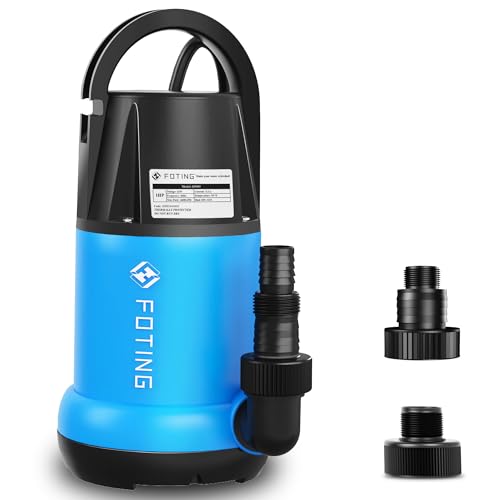
FOTING's 1 HP pump pushes up to 4600 GPH, around 76 gallons a minute at five feet, and lifts water 31 feet vertically. A removable bottom makes cleaning simple and helps the pump last, while the rounded handle stays comfortable and cuts-free during moves. Corrosion-resistant thermoplastic housing and a built-in thermal overload protector round out the design, and it drains down to about a fifth of an inch. Multiple hose adapters cover different flow needs. One limitation: like other plug-in utility pumps here, it lacks a built-in float switch, so it does not cycle on and off automatically.
Motor1 HP
Flow rate4600 GPH
Max lift31 ft
HousingThermoplastic
Pros
- Strong flow and 31-foot lift
- Removable bottom eases cleaning
- Multiple hose adapters included
Cons
- No automatic float switch
- Handles only small solids
Check price on Amazon ›
AgiiMan aims at lighter work, drawing 75 watts to move up to 850 gallons per hour, which owners report clears pool covers far quicker than an ordinary pump. Its sturdy ABS shell resists rough weather, and mesh screens on all four sides pull water across a wide area. A built-in temperature control core prevents dry burning, and the IPX8 rating reflects full submersion. A 16-foot anti-twist hose plus a 25-foot cord let you drain from depth while keeping the outlet well clear of water. One limitation: at this flow it suits shallow draining, not storm-scale basement flooding.
Power draw75 W
Flow rate850 GPH
WaterproofingIPX8
ShellABS with mesh screens
Pros
- Four-sided mesh drains a wide area
- Long hose and cord reach from depth
- Dry-burn protection built in
Cons
- Low flow unsuited to heavy flooding
- Short maximum lift height
Check price on Amazon ›
Superior Pump's 91250 uses a 1/4 HP motor to move up to 1800 gallons per hour and lift water as high as 25 feet, which covers most occasional cleanup jobs. Tough thermoplastic keeps it light, and a 1-1/4 inch NPT discharge supports higher capacity pumping with a 3/4 inch garden hose adapter included. The removable suction screen handles solids up to an eighth of an inch, and every unit is factory tested. A 10-foot cord adds reach. One limitation: its 1/4 HP output trails the heavier storm pumps here, so it is a lighter-duty helper rather than a primary flood defense.
Motor1/4 HP
Flow rate1800 GPH
Max lift25 ft
Discharge1-1/4 in NPT
Pros
- Light thermoplastic build
- Removable suction screen for cleaning
- Factory tested with hose adapter included
Cons
- Lowest horsepower in this lineup
- Handles only very small solids
Check price on Amazon ›
What to look for
Match horsepower to the job
Horsepower drives both flow and lift, so size it to your worst-case flooding. A 1 HP submersible clears window wells and flooded basements quickly, while 1/3 HP pit pumps handle steady seepage. Reserve 1/4 HP utility models for occasional, shallow cleanup rather than storm defense.
Flow rate versus lift height
Rated flow, given as gallons per hour, drops as the pump pushes water higher. Manufacturers quote flow at a set lift, often five feet, so check both numbers together. Longer vertical runs to your outlet demand a pump with headroom in its stated maximum lift.
Housing material and lifespan
Cast iron pumps like the Zoeller and WAYNE dissipate heat well and shrug off years of pit duty. Thermoplastic and ABS shells weigh less and resist corrosion, which suits portable draining. Owners report cast iron favors permanent installs, while plastic bodies favor pumps you move around.
Switches, protection, and debris
An automatic float switch cycles the pump without supervision, useful in a fixed sump. Plug-in utility pumps run only while powered. Look for a thermal overload protector to guard the motor during dry running, and check the solids rating so debris passes instead of clogging the intake.
Frequently asked questions
What horsepower sump pump do I need for a basement?
For heavy basement flooding, a 1 HP submersible moves the most water fastest and lifts it high. For steady pit seepage, a 1/3 HP cast iron pump runs quieter and lasts. Reserve 1/4 HP utility pumps for lighter, occasional draining.
What does GPH mean on a sump pump?
GPH stands for gallons per hour, the rate at which the pump moves water. Ratings like 4500 or 4600 GPH are measured at a fixed lift, often five feet. Flow falls as the pump pushes water higher, so read flow and lift together.
Do I need an automatic float switch?
For a fixed basement sump, yes. A float-activated switch, like the one on the Zoeller M53, turns the pump on and off on its own as water rises and falls. Plug-in utility pumps such as the AQUASTRONG and FOTING run only while you keep them powered.
Cast iron or thermoplastic housing?
Cast iron, used on the Zoeller and WAYNE, dissipates heat and endures long permanent pit duty. Thermoplastic and ABS bodies weigh less and resist corrosion, which suits portable draining. Choose based on whether the pump stays put or moves between jobs.
Can these pumps handle debris and solids?
Most here pass small solids, typically up to a fifth or an eighth of an inch, through a screen or vortex impeller. The Zoeller's non-clogging vortex design and FOTING's removable bottom help with dirtier water. None are built for large debris, so pre-screen heavy sediment.
How high can a sump pump lift water?
Maximum lift, or head, ranges here from about 25 feet on the Superior Pump up to 30 and 31 feet on the AQUASTRONG and FOTING. Measure the vertical run from the pit to your discharge outlet, then pick a pump whose rated lift exceeds it comfortably.
Are these pumps safe to run dry?
Several include a built-in thermal overload protector, including the AQUASTRONG, FOTING, and AgiiMan, which guards the motor if it runs without water. Even so, avoid prolonged dry running. Bottom suction pumps drain closer to the surface before losing prime.
Which pump suits pool cover or shallow water?
The AgiiMan pool cover pump targets shallow standing water, drawing low wattage to move up to 850 gallons per hour with a long hose and cord. For pools, ponds, or hot tubs alongside flood duty, the 1 HP FOTING and AQUASTRONG cover both.
The verdict
AQUASTRONG 1 HP Sump Pump 4500 GPH Submers...
9.2/10
The AQUASTRONG 1 HP earns Best Overall for its strong flow, 30-foot lift, and quick basement draining. Choose the Zoeller M53 for a rugged, automatic permanent pit pump, or the WAYNE CDU790 for quiet indoor duty. The FOTING handles dirtier pool and pond water, the AgiiMan clears shallow pool covers, and the lightweight Superior Pump covers occasional cleanup. Match horsepower and lift to your worst-case flooding, then let housing material follow how the pump will live.
Check price on Amazon ›
Our top pick, secure checkout via Amazon
Note: Availability and specifications change often. Always confirm the current details on Amazon before buying.