Tools & DIY 10 Transfer Pumps for Moving Water and Fuel
P
By the Pickpedia Team
·10 picks compared
·Last verified September 2026
Affiliate disclosure: As an Amazon Associate, Pickpedia earns from qualifying purchases. Links on this page are paid links, and we may earn a commission at no extra cost to you. This never affects our picks or scores.
Quick answer
Pick a transfer pump by liquid and power source. Corded utility pumps move large water volumes fast, cordless tool-battery units win on jobsite portability, diaphragm pumps suit RV and marine potable lines, and battery siphons handle fuel where no outlet exists.
10 Transfer Pumps for Moving Water and Fuel at a glance
Why you can trust this guide
We compared these picks using verified manufacturer specifications, available manuals and documentation, current retailer listings, and patterns in owner feedback, alongside editorial research. We focus on measurable differences such as performance, capacity, usability, and build quality. Pickpedia does not present editorial research as laboratory testing, and we do not claim hands-on testing unless it was actually performed.
How we chose: We compared 10 transfer pumps across flow rate, lift height, liquid compatibility, power source, and build materials.
Transfer pumps span a wide range, from corded utility units that drain a flooded basement to cordless siphons that empty a gas can in minutes. Matching the pump to your liquid and your access to power matters more than raw horsepower numbers.
This roundup groups picks by real strengths, based on manufacturer specifications and features owners commonly point to. Water movers, RV pressure pumps, submersibles, and fuel siphons each earn a spot, so you can shortlist by job instead of guessing.
Our top picks
Running on 115V AC, this compact utility pump moves clean water at roughly 330 gallons per hour and lifts over 42 feet at short distances. Its heavy metal body, copper wire motor, and zinc alloy volute aim for a longer life than plastic rivals. A waterproof on/off switch and two 6 foot hoses come included, and the strainer attachment pulls water down to about an eighth of an inch. It self-primes but the manufacturer instructs adding liquid before every start to avoid dry running, which owners must remember each time. Fits pools, ponds, boats, and garden irrigation.
Power1/10 HP, 115V AC
Flow rateAbout 330 GPH
Max liftOver 42 ft
IncludedTwo 6 ft hoses, strainer
Pros
- Metal body and copper motor for longevity
- Removes water to about 1/8 inch
- Waterproof built-in switch
Cons
- Requires priming before every use
- Motor must stay dry, not submersible
Check price on Amazon ›
Built for the M18 platform, this bare-tool pump lets Milwaukee owners transfer water without dragging out a cord or generator. Package weight sits near 8.8 pounds, so it stays luggable between jobs. Because it ships as a tool only, runtime depends entirely on the M18 battery you pair with it, which keeps the listing spec sheet short. Documented details focus on model number and packaging rather than published flow figures, so buyers should confirm expected output for their task. For anyone standing in a Milwaukee ecosystem, the appeal is skipping another charger and using packs they already own on site.
Model2771-20
PlatformM18 cordless
Package weight8.8 lb
OriginUnited States
Pros
- Runs on existing M18 batteries
- Cordless jobsite portability
- Reasonably light package
Cons
- Battery and charger sold separately
- Published flow specs are limited
Check price on Amazon ›
This 110V diaphragm pump delivers a 4.0 GPM flow and switches itself on and off with a smart pressure sensor rated near 50 PSI. Running on AC power means no marine battery to lug around, and the pressure range adjusts between roughly 45 and 70 PSI to match a faucet setup. Self-priming reaches almost 10 vertical feet, and built-in thermal overload protection cuts the circuit if temperatures climb too high. The manufacturer notes continuous operation past one hour, though sustained heavy-duty runs still stress any diaphragm pump. Reviewers point to it as a fix for weak RV, boat, and irrigation water pressure.
Flow rate4.0 GPM
Shut-offAbout 50 PSI
Pressure range45 to 70 PSI
Self-primingUp to 9.8 ft
Pros
- Auto pressure on/off operation
- Thermal overload protection
- Adjustable pressure range
Cons
- Tied to an AC outlet
- Diaphragm strains under nonstop heavy use
Check price on Amazon ›
With a 1/2 HP motor pushing up to 1600 gallons per hour and a 120 foot pumping height, this VEVOR moves serious volume for its class. A rugged cast iron body handles wear, and rust-proof electrophoresis treatment on the head resists corrosion. Owners get a tool-free inlet, a 10 foot cord, an integrated one-click switch, plus a filter, spare carbon brush, and two brass connectors. Cast iron adds heft, so the portable handle earns its keep. The maker warns against running dry and stresses submerging the impeller before each start, which remains the main routine to respect. Strong pick for aquariums, pools, and gardens.
Power1/2 HP, 115V AC
Flow rateUp to 1600 GPH
Max height120 ft
BodyCast iron
Pros
- High flow and lift
- Corrosion-treated cast iron build
- Tool-free inlet and full accessory kit
Cons
- Cast iron makes it heavy
- Must prime and never run dry
Check price on Amazon ›
TecHome keeps things simple with a 1/10 HP, 115V pump rated near 330 GPH through 3/4 inch ports. Fill the head, connect the hose, plug in, and pump, a routine that suits occasional household jobs. A portable handle and light frame make it easy to carry, while the included 6 foot suction hose, strainer, and spare impeller kit add practical extras. The strainer pulls water down to roughly an eighth of an inch from the surface. It is non-submersible, so keeping the motor dry is essential and limits where you can place it. Owners use it on aquariums, rain barrels, pools, and lawns.
Power1/10 HP, 115V
Flow rate330 GPH
Ports3/4 inch
ExtrasStrainer, spare impeller
Pros
- Lightweight and portable
- Includes spare impeller kit
- Removes water to about 1/8 inch
Cons
- Motor cannot get wet
- Modest lift for tall drains
Check price on Amazon ›
Aimed at the trades, this 20V MAX pump transfers up to 10 gallons per minute of tap water and even handles a 60/40 water and glycol mix for HVAC work. It self-primes, lifts up to 25 feet, and moves around 300 gallons per battery charge, with a LED-embedded switch for control. A lightweight design keeps it manageable across a jobsite, and it is Tool Connect Tag ready for asset tracking. Peak flow drops to roughly 4.5 GPM at 45 feet of head, so tall lifts trade speed for height. For DEWALT owners, the draw is versatility on refrigeration and general water tasks.
Max flow10 GPM
Lift heightUp to 25 ft
Per chargeAbout 300 gallons
Platform20V MAX
Pros
- Handles water and glycol mixes
- Fast flow with LED switch
- Lightweight and tag ready
Cons
- Flow falls sharply at tall head
- Battery not included
Check price on Amazon ›
When you need to drop a pump straight into water, this 1 HP submersible drains up to 4500 GPH at 5 feet and lifts 30 vertical feet. A bottom suction design filters debris and removes water to about a fifth of an inch, handling solids up to that size. Reinforced thermoplastic resists corrosion and abrasion, a quality seal guards against leaks, and a thermal overload protector shields the motor during dry running. Multiple discharge adapters and a 10 foot UL cord ease installation. It is built for water removal, not fuel or pressurized supply lines, so match it to drainage jobs specifically.
Power1 HP
Flow rate4500 GPH at 5 ft
Max lift30 ft
SolidsUp to 1/5 inch
Pros
- High drainage volume
- Handles small solids
- Thermal overload protection
Cons
- Water removal only
- Not for pressurized supply
Check price on Amazon ›
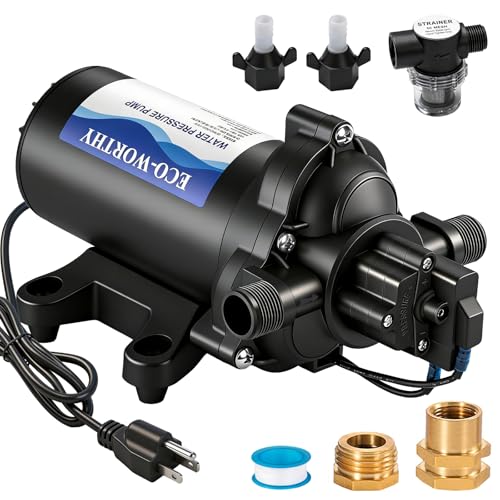
SEAFLO's 33 Series targets potable systems, delivering 3.3 GPM at a 45 PSI shut-off with NSF and UL certifications for drinking water and RV plumbing. A smart pressure switch activates on demand and adjusts across a 17 to 60 PSI range, while Santoprene diaphragms and EPDM valves handle fresh water duty. It self-primes up to 6 feet and can run dry without damage, a reassuring trait when tank levels swing. The kit includes a strainer, barbed fittings, wall plug, and mounting hardware, plus a 4 year warranty. Flow sits lower than utility movers, so this is a supply pump, not a bulk drainer.
Flow rate3.3 GPM
Shut-off45 PSI
Pressure range17 to 60 PSI
Warranty4 years
Pros
- NSF and UL certified for potable water
- Run-dry capable
- Long warranty and full kit
Cons
- Lower flow than utility pumps
- Supply duty, not bulk draining
Check price on Amazon ›
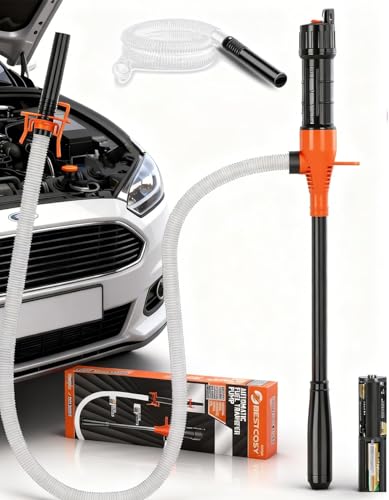
This battery-powered siphon empties gas cans and jugs without a wall outlet, making it handy for emergencies and remote trips. Powered by 2 D cells or 6 AA batteries, it pumps around 2.4 GPM and can move over 1000 gallons on a single set. A 1/2 inch, 47 inch discharge tube plus a 16 inch suction tube fits 3 to 5 gallon cans, and it handles water, gas, kerosene, and diesel. Batteries are not included, and the maker warns corrosive liquids are off limits, so check compatibility before use. Reviewers like it as a grab-and-go tool for DIY mechanics.
Power2 D or 6 AA batteries
Flow rate2.4 GPM
Per battery setOver 1000 gallons
Hose47 in discharge
Pros
- No outlet or cord needed
- Handles fuel and water
- Long runtime per battery set
Cons
- Batteries not included
- No corrosive liquids
Check price on Amazon ›
This manual siphon assembles in about 5 seconds without screwdrivers or clamps, then moves roughly 2.9 to 3.2 gallons per minute by pumping or siphoning. A sturdy PP cylinder and wear-resistant PVC hoses aim for long life with simple upkeep, while a shark-bite connection guards against leaks across fuel, coolant, oil, and gasoline. Two 52 inch tubes reach deep into tanks and barrels, and it doubles for yard equipment refueling or aquarium water changes. Being hand-operated, output depends on your pumping effort, so large volumes take patience compared to a powered unit. Owners value the tool-free, no-battery simplicity.
Flow rate2.9 to 3.2 GPM
SetupUnder 5 seconds, tool-free
TubesTwo 52 inch hoses
BodyPP and PVC
Pros
- No batteries or power needed
- Fast tool-free assembly
- Leak-resistant shark-bite seal
Cons
- Output depends on manual effort
- Slow for large volumes
Check price on Amazon ›
What to look for
Match the pump to your liquid
Water utility pumps, potable diaphragm pumps, submersibles, and fuel siphons are not interchangeable. Moving gasoline through a water-only pump risks damage, and drinking-water lines demand NSF or UL certified units. Decide what you are moving first, then narrow by flow and lift.
Corded, cordless, or manual
Corded utility pumps offer steady high volume near an outlet. Cordless tool-battery units, like the Milwaukee and DEWALT, shine on jobsites where you already own packs. Battery siphons and hand pumps win when no power exists, trading speed for freedom.
Read flow and lift together
A high gallons-per-hour figure often assumes minimal lift. Numbers drop as pumping height climbs, so check the rated lift for your job. A basement drain needs vertical push, while a barrel-to-garden transfer prioritizes raw flow instead.
Respect priming and dry-run rules
Many utility pumps must have the impeller submerged or the head filled before every start, and running them dry shortens life. Submersibles and certain diaphragm pumps tolerate dry running better, so factor maintenance habits into your choice.
Frequently asked questions
What is a transfer pump used for
A transfer pump moves liquid from one place to another, such as draining a flooded basement, emptying a pool, supplying RV water, or siphoning fuel between cans. The right type depends on the liquid and your power source.
Can I use a water pump for fuel
No. Water pumps are not sealed or rated for gasoline, diesel, or other fuels, and using one risks damage or hazard. Choose a dedicated fuel transfer pump, and confirm it excludes corrosive liquids before pumping.
What does self-priming mean
A self-priming pump can pull liquid up into itself from below without being manually filled each time, within a rated lift such as 6 feet. Many still ask you to add liquid before the first start to protect the impeller.
How do I stop a pump from running dry
Keep the impeller submerged or the head filled per the manual, and avoid pumping past the point where the source empties. Some pumps include thermal overload or run-dry protection, but following the priming steps remains the safest habit.
Which pump is best for RV water
Look for a diaphragm pressure pump with NSF and UL potable-water certification, an automatic pressure switch, and self-priming ability. The SEAFLO and ECO-WORTHY picks here target RV, boat, and cabin fresh-water systems specifically.
Do cordless pumps come with batteries
Often not. Tool-platform pumps like Milwaukee M18 and DEWALT 20V MAX usually ship as bare tools, so you supply the battery and charger. Battery siphons may need D or AA cells that are also sold separately.
How much water can these pumps move
It varies widely, from a few gallons per minute on potable and manual pumps to 1600 GPH or 4500 GPH on utility and submersible units. Always read the rating at a realistic lift height for your task.
Are submersible pumps better than utility pumps
They suit different jobs. Submersibles drop into water and clear flooded areas with high volume, while non-submersible utility pumps sit outside and must stay dry. Pick based on whether the pump can safely sit in the liquid.
The verdict
FIDISP Water Transfer Pump, 115V 1/10 HP E...
8.7/10
For all-around water moving, the VEVOR cast iron pump leads with strong flow, lift, and a rugged build. Draining flooded spaces favors the AQUASTRONG submersible, while RV owners should choose the certified SEAFLO. Tradespeople on a battery platform get the DEWALT or Milwaukee, and anyone siphoning fuel off-grid is well served by the battery or manual hand pumps. Match the pick to your liquid and power access first.
Check price on Amazon ›
Our top pick, secure checkout via Amazon
Note: Availability and specifications change often. Always confirm the current details on Amazon before buying.