Tools & DIY 7 Well Pumps for a Steady Home Water Supply
P
By the Pickpedia Team
·7 picks compared
·Last verified September 2026
Affiliate disclosure: As an Amazon Associate, Pickpedia earns from qualifying purchases. Links on this page are paid links, and we may earn a commission at no extra cost to you. This never affects our picks or scores.
Quick answer
The VEVOR 1 HP submersible is our top well pump for most deep wells, moving water 207 feet up at 37 gallons per minute on a standard 115V circuit. Match the pump to your well type first. Deep wells past 25 feet need a submersible or convertible unit, while shallow wells run fine on a jet pump with a pressure tank. Confirm your casing size, voltage supply, and required flow before you buy anything.
7 Well Pumps for a Steady Home Water Supply at a glance
Why you can trust this guide
We compared the real specifications from each retailer and manufacturer listing against patterns in owner feedback, focusing on well type, head, flow, voltage, casing fit, and install steps.
Deep well submersibles and shallow well jet pumps were judged on their own terms, since each suits a different well depth and supply setup rather than competing head to head.
How we chose: We compared seven well pumps across submersible and jet designs, weighing head height, flow, motor build, and voltage fit.
Choosing a well pump comes down to depth, casing size, and how much water your household actually pulls. Submersible units sit inside the well and push water up, so they suit deep drilled wells. Jet pumps stay above ground and draw water toward them, which works well for shallow sources.
Our list spans a range of horsepower ratings, voltages, and materials so you can match one to your setup. Every entry below is grounded in the maker's published specifications, with a real limitation called out so nothing gets oversold. Read your casing diameter and power supply carefully before ordering.
Our top picks
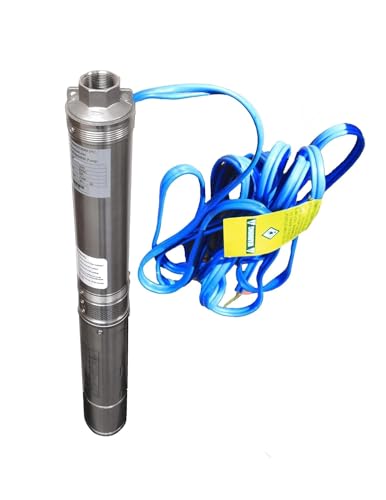
The VEVOR runs on a standard 115V household circuit yet pushes water 207 feet up from a deep well at up to 37 gallons per minute, so it suits homes drawing from casings four inches or wider. A six-stage stainless steel body resists rust while submerged, an IP68 rating and ETL listing back the sealed motor, and a built-in check valve holds the column of water between cycles. The discharge is a 1-1/4 inch NPT thread, and 33 feet of cord ships in the box. Two honest caveats: the pump must stay submerged and cannot run dry, and on wells deeper than the cord reaches you will need to extend that 33 foot lead.
Power1 HP, 115V, 60Hz
Max Flow37 GPM
Max Head207 ft
Build4 inch stainless, 6 stage, IP68
Discharge1-1/4 inch NPT
Cord33 ft
Pros
- Stainless frame resists rust underwater
- Copper motor with overheat cutoff
- Built in check valve and sediment mesh
Cons
- Cannot run dry or at low water level
- 33 ft cord may need extension on deeper wells
Who should buy it
- Your well is deep, past 25 feet, with a casing four inches or wider
- You want strong 37 GPM flow and 207 foot head on a standard 115V circuit
- You want a sealed IP68 stainless body with a built-in check valve
Skip it if
- Your well is shallow and better served by a jet pump
- Your well is deeper than the 33 foot cord reaches without an extension
Check price on Amazon ›
Acquaer built this 1 HP jet pump to convert between single pipe wells up to 25 feet and two pipe wells reaching 90 feet, with venturis and an ejector kit included. Its dual voltage motor runs on 115V or 230V, arriving factory set for 230V. Thermal overload protection shuts the motor off when the water inside runs dry, and an automatic pressure switch starts near 20 PSI and stops around 40 PSI. A rugged cast iron volute anchors durability. One drawback: the factory 230V wiring means you must confirm and possibly rewire for a 115V supply before use.
Power1 HP
Voltage115V / 230V
Well Depth0 to 90 ft convertible
Pressure Range20 to 40 PSI
Pros
- Converts for shallow or deeper wells
- Dual voltage flexibility
- Cast iron volute for durability
Cons
- Ships factory set for 230V wiring
- Two pipe conversion adds install steps
Who should buy it
- Your setup may change depth and you want a convertible 0 to 90 foot pump
- You want dual 115V or 230V voltage flexibility
- You value a cast iron volute built to last
Skip it if
- You want a plug and play single voltage pump
- You would rather avoid two-pipe conversion steps
Check price on Amazon ›
Red Lion's premium shallow well jet pump runs a 3/4 HP motor drawing up to 16 GPM, with a 1-1/4 inch FNPT intake and 1 inch FNPT discharge. Rugged cast iron casing and volute pair with a glass filled thermoplastic impeller and diffuser for a durable, efficient build. The motor accepts 115 or 230 volts, carries a capacitor for stronger starts, and holds CSA listing across the USA and Canada. A factory preset 30/50 pressure switch and gauge come included. The tradeoff: at 3/4 HP and 16 GPM, its flow trails the larger jet pumps here, so heavy simultaneous demand may strain it.
Power3/4 HP
Max Flow16 GPM
Voltage115 / 230V
Max Head150 ft
Pros
- Cast iron casing and volute
- CSA listed dual voltage motor
- Preset pressure switch and gauge included
Cons
- Lower flow than larger jet pumps
- Voltage must be selected to match supply
Who should buy it
- You want a trusted cast iron shallow well jet pump
- You want a CSA listed dual voltage motor with a preset pressure switch and gauge
- Your demand is modest and steady rather than high flow
Skip it if
- You need high flow for irrigation
- Your well is too deep for a shallow well jet pump
Check price on Amazon ›
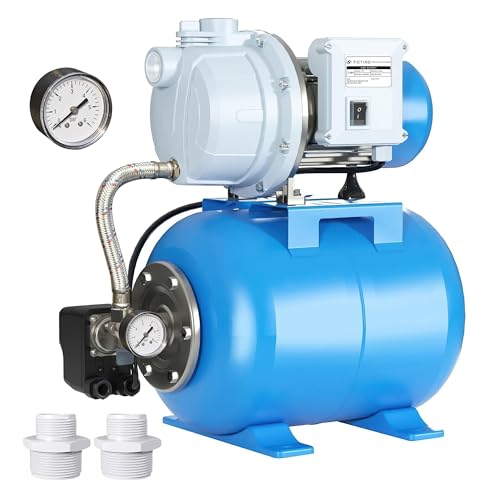
Aquastrong drives this shallow well jet pump with a 1.6 HP capacitor motor, reaching roughly 1340 GPH flow or a 164 ft head, with suction up to 26 feet. Stainless steel housing resists corrosion, and a 5 gallon tank with pressure gauge supports automatic operation between 20 and 40 PSI. A carbon ceramic mechanical seal guards against leaks, while temperature sensing halts the motor during dry running. It arrives pre assembled with 1 inch NPT ports and hose adapters. Worth noting: you must prime it before startup and protect it from freezing, since winter exposure can damage the unit.
Power1.6 HP
Max Flow1340 GPH
Max Head164 ft
Tank5 gallon
Pros
- Strong flow for irrigation
- Stainless housing resists corrosion
- Automatic pressure operation with gauge
Cons
- Needs priming before first start
- Must be protected from winter freezing
Who should buy it
- You want high flow near 1340 GPH for irrigation and garden use
- You want a stainless housing with automatic pressure operation and a gauge
- You run a shallow well and can prime before the first start
Skip it if
- You cannot prime the pump before first use
- You cannot protect it from winter freezing
Check price on Amazon ›
This 4 inch submersible pump delivers 1 HP on 230V, rated for 33 GPM flow and a 207 ft head. A solid stainless steel body pairs with a heavy duty thermoplastic discharge, framing it as an industrial grade unit that still handles home use. The built in 1 HP capacitor start means no separate control box is required, which simplifies wiring and cuts one common failure point. Owners get straightforward deep well performance without extra hardware. The clear limitation: it runs only on 220 to 230V, so a 115V household supply will not power it and voltage must match exactly.
Power1 HP
Voltage230V
Max Flow33 GPM
Max Head207 ft
Pros
- Stainless body built for long life
- No control box needed
- Solid deep well flow and head
Cons
- Requires 220 to 230V supply only
- Heavy duty build needs careful lowering
Who should buy it
- You have a 230V supply and want a deep well submersible
- You want a stainless body with no separate control box
- You want solid 33 GPM flow and 207 foot head
Skip it if
- You only have a 115V supply
- You want a lighter pump that is easy to lower alone
Check price on Amazon ›
FOTING pairs a 1.5 HP motor with a 5 gallon tank, reaching up to 1340 GPH flow and a 164 ft lift, with suction near 23 feet. Its pressure switch holds water pressure automatically, starting around 1.5 bar and stopping near 3 bar, so taps and sprinklers stay steady. A reinforced thermoplastic body and iron tank resist corrosion, and a carbon ceramic seal limits leaks. Overheat protection guards the motor, and two adapters plus 1 inch NPT ports ease hookup. Keep in mind: the pump needs enough priming water on first use, and its suction depth suits shallow sources only.
Power1.5 HP
Max Flow1340 GPH
Max Head164 ft
Tank5 gallon
Pros
- Automatic pressure holds all day
- Corrosion resistant body and tank
- Includes adapters for easy hookup
Cons
- Requires priming before first use
- Shallow suction limit near 23 feet
Who should buy it
- You want an automatic pressure tank that holds supply through the day
- Your well is shallow with a suction lift near 23 feet
- You want included adapters for a straightforward hookup
Skip it if
- Your well is deeper than about 23 feet of suction lift
- You cannot prime it before first use
Check price on Amazon ›
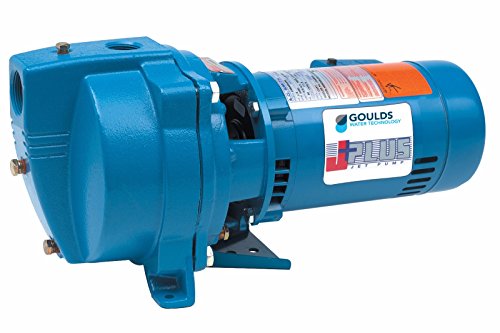
Goulds keeps this shallow well jet pump straightforward with a 1/2 HP capacitor start motor running 115 or 230 volts at 3500 RPM, single phase. A stainless steel shaft and built in overload with automatic reset support steady operation, and the unit carries a UL778 listing. It ships with a pressure regulator and a preset 30 to 50 PSI switch, plus 1-1/4 inch NPT suction and 1 inch NPT discharge connections. Reviewers note the trusted name behind it. The main limit: at 1/2 HP this is the lightest pump here, so it fits modest demand rather than high volume irrigation.
Power1/2 HP
Voltage115 / 230V
Speed3500 RPM
Pressure Switch30 to 50 PSI
Pros
- Stainless steel shaft
- Automatic reset overload protection
- UL778 listed with pressure regulator
Cons
- Lowest horsepower on this list
- Suited to modest demand only
Who should buy it
- You want a compact half horsepower shallow well jet pump
- You have modest household demand
- You want a UL778 listed pump with automatic reset overload protection
Skip it if
- You need more than modest flow
- You want the highest horsepower on this list
Check price on Amazon ›
What to look for
Match the pump to your well depth
Depth decides everything. Wells deeper than 25 feet call for a submersible pump that sits in the water and pushes it up, or a convertible jet pump running two pipes. Shallow sources within suction reach work fine on a standard jet pump mounted above ground.
Check casing size and voltage
A 4 inch submersible needs a casing of 4 inches or larger, so measure before ordering. Confirm your power supply too, since some pumps run only 230V while others accept both 115 and 230 volts. Mismatched voltage can stop a pump from ever starting.
Understand flow and head ratings
Flow tells you how much water moves per minute or hour, while head measures how high the pump can lift it. A tall lift with low output suits deep wells, and high flow with modest head fits irrigation. Balance both against your real household draw.
Plan for pressure and priming
Many jet pumps pair with a pressure tank and switch that cycle automatically between set PSI points. Most need priming with water before the first start, and none should run dry. Protect above ground units from winter freezing to avoid cracked housings.
Frequently asked questions
Do I need a submersible or a jet pump?
Submersible pumps sit inside deep wells and push water up, so they suit drilled wells past 25 feet. Jet pumps stay above ground and draw water toward them, which fits shallow sources. Convertible jet pumps can cover both with an ejector kit.
What does horsepower actually change?
Higher horsepower generally lifts water farther and moves more of it. A 1/2 HP unit handles modest household draw, while 1 HP and up serve deeper wells or heavier irrigation. Pick the rating that matches your depth and simultaneous demand, not the biggest number.
Why does voltage matter so much?
Some pumps run only on 230V, others accept 115 or 230 volts. If the pump voltage does not match your supply, it will not run and may be damaged. Always confirm the wiring and, on dual voltage models, check the factory setting first.
Can I run a pump without water in it?
No. Running dry causes overheating and can burn out the motor. Most models here include overheat or thermal protection that stops the pump, but you should still prime jet pumps and never operate a submersible at low water level.
What size well casing do I need?
A 4 inch submersible pump requires a casing of 4 inches or larger. Measure your casing diameter before buying, since a pump that will not fit down the well is a common and avoidable mistake. Jet pumps mount outside, so casing fit matters less.
How does the pressure tank work?
A pressure tank stores water under pressure so the pump does not cycle on every tap. The switch starts the pump at a low PSI point and stops it at a higher one, often 30 to 50 PSI. This steadies flow and reduces motor wear.
Are stainless steel pumps worth choosing?
Stainless steel resists rust and corrosion, which matters most for submersibles left underwater for years. Cast iron bodies also last well on above ground jet pumps. Owners report both materials holding up when the pump is sized and installed correctly.
Will these pumps survive winter?
Above ground jet pumps can crack if water inside freezes, so drain or insulate them in cold climates. Submersibles stay below the frost line and are less exposed. Check the maker's guidance and keep any surface unit protected through winter.
The verdict
VEVOR Deep Well Submersible Pump 1 HP 115V...
9.2/10
The VEVOR 1 HP submersible is our top pick, earning Best Overall for its stainless build, strong flow, and standard voltage on deep wells. Shallow well owners chasing high output should look at the Aquastrong or FOTING jet pumps with their pressure tanks. Choose the Acquaer convertible if your setup may change depth, and the Red Lion or Goulds for a trusted, lighter cast iron workhorse. Match depth, casing, voltage, and flow to your home before ordering.
Check price on Amazon ›
Our top pick, secure checkout via Amazon
Note: Availability and specifications change often. Always confirm the current details on Amazon before buying.