Electronics Evaporative Coolers vs Air Conditioners: How Swamp Coolers Work and When They Help
P
By the Pickpedia Team
·1 picks compared
·Last verified August 2026
Affiliate disclosure: As an Amazon Associate, Pickpedia earns from qualifying purchases. Links on this page are paid links, and we may earn a commission at no extra cost to you. This never affects our picks or scores.
Cooling a room comes down to matching the machine to your climate. A fan just moves air. An evaporative cooler, or swamp cooler, chills dry air by evaporating water into it. An air conditioner truly removes heat from any air, humid or not. The make-or-break rule is dry versus humid, and this guide explains it.
The three main ways to cool a room
Home cooling splits into a few distinct approaches. A fan does not cool the air at all. It moves air to help sweat evaporate off your skin, which feels cooler. An evaporative cooler, or swamp cooler, chills the air itself by evaporating water into it, which lowers the temperature but adds humidity. An air conditioner uses refrigerant to actually pull heat from the air and expel it outside, genuinely lowering the room temperature and cutting humidity. These are fundamentally different machines. Knowing which one you are buying is the single most important step, because each shines in some conditions and fails in others.
How an evaporative cooler works
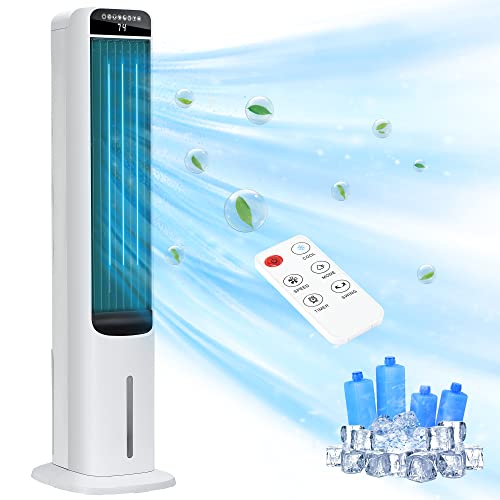
Evaporation is the whole principle. When water evaporates, it absorbs heat and cools the surrounding air, the same reason you feel cold stepping out of a pool. The cooler draws warm air through wet honeycomb pads, the water evaporates, and the air comes out cooler and more humid. A unit like this evaporative air cooler often adds ice packs to chill the pads further, plus a tank you refill with water. It sips power, using a fraction of what an air conditioner draws. It is portable and needs no installation or venting. But its cooling depends entirely on evaporation, which is where the crucial catch lies.
The dry-versus-humid rule
Here is the rule that decides everything: evaporative coolers work well only in dry air. In a dry climate or a dry room, there is plenty of room for water to evaporate, so the cooler drops the temperature noticeably and the added humidity feels pleasant. In humid conditions, the air is already full of moisture. Little water can evaporate, so you get almost no cooling, and what you add is more unwanted humidity, making the room muggier rather than cooler. That is why these coolers are popular in dry desert regions and disappointing in humid ones. Before buying, ask one honest question: is your climate, or at least your room, dry? If yes, a cooler can genuinely help. If no, it is the wrong tool.
When an air conditioner is the right answer
Need reliable cooling regardless of humidity? Want to genuinely lower a room's temperature? An air conditioner is the tool, because it removes heat and moisture rather than adding moisture. Portable and window units use far more electricity, need venting or a window fit, and run heavier and noisier. In return they deliver real, dependable cooling in any humidity and can chill a whole room. The trade-off is power draw and installation versus guaranteed performance. Live somewhere humid, or need to be sure of cooling in any conditions? An air conditioner buys that certainty, which an evaporative cooler cannot provide.
Matching the cooler to your situation
Choosing well means matching the machine to your reality. Dry climate and want portable, low-power spot cooling for a small room? An evaporative cooler is a smart, sensible pick. Humid air, or need whole-room cooling you can rely on? An air conditioner is worth the extra power and setup. Just want moving air on a mild day? A simple fan may be all you need, and it is the simplest option of all. Room size matters too. Evaporative coolers and small units handle personal or small-room cooling, not whole houses. Being honest about your climate, your room and your real need saves both hassle and disappointment.
Getting the best from an evaporative cooler
Suits your conditions? A few habits maximise it. Run it in the driest air you can, and in some climates, cracking a window helps by letting humid air escape rather than building up. Keep the tank topped up. Use ice packs if included for colder output. Sit within the airflow, since it cools the air near it rather than the whole house. Clean the pads, filter and tank regularly, because they get damp and can harbour mould or mineral buildup if neglected. Run it on lower, quieter settings for sleep. Used in the right conditions and kept clean, an evaporative cooler is an efficient, pleasant way to take the edge off dry heat.
The bottom line
Buying the right cooler starts with knowing the difference. A fan moves air. An evaporative cooler chills dry air by adding moisture. An air conditioner truly cools and dehumidifies any air, using more power to do it. The make-or-break rule is dry versus humid: evaporative coolers help in dry conditions and disappoint in humid ones. Match the machine to your climate and room honestly. Choose an evaporative cooler for portable cooling in dry heat, an air conditioner for reliable cooling in any humidity, and a fan for mild comfort. Get that match right and you stay cool and satisfied rather than let down by the wrong machine.
Evaporative Coolers vs Air Conditioners: How Swamp Coolers Work and When They Help at a glance
Why you can trust this guide
We compared these picks using verified manufacturer specifications, current retailer listings, and patterns in owner feedback, alongside editorial research. We focus on measurable differences such as performance, capacity, usability, and build quality. Pickpedia does not present editorial research as laboratory testing, and we do not claim hands-on testing unless it was actually performed.
Our top picks
A 41-inch tower evaporative air cooler combining a fan, humidifier and swamp cooler, with 3 speeds, 4 modes, 120 degree oscillation, 4 reusable ice packs, honeycomb pads, a 4-litre tank, remote and LED panel with a 12-hour timer, an 80-watt draw and ETL listing, for spaces up to about 300 square feet in dry conditions.
TypeEvaporative cooler (3-in-1)
AlsoFan and humidifier
CoverageUp to about 300 sq ft
Speeds/modes3 speeds, 4 modes
Tank4L, plus 4 ice packs
Oscillation120 degrees
Power80W, ETL-listed
ControlRemote, LED panel, 12h timer
Pros
- Blows cooler air than a fan in dry conditions
- 3-in-1 fan, humidifier and evaporative cooler
- Slim, light and portable with no installation
- Remote, touch panel, oscillation and 12h timer
- Draws just 80 watts, with a quiet sleep mode
- Reusable ice packs and washable parts
Cons
- An evaporative cooler, NOT an air conditioner
- Works poorly in humid weather and adds humidity
- Spot cooler for small rooms, not whole-house AC
- Needs regular water top-ups and pad cleaning
Read our full review → Check price on Amazon ›
Note: Availability and specifications change often. Always confirm the current details on Amazon before buying.