Baby & Kids Getting Kids into Science: Microscopes, STEM Kits and Toys That Actually Get Used
P
By the Pickpedia Team
·1 picks compared
·Last verified August 2026
Affiliate disclosure: As an Amazon Associate, Pickpedia earns from qualifying purchases. Links on this page are paid links, and we may earn a commission at no extra cost to you. This never affects our picks or scores.
Science toys that actually get used are usable, open-ended and matched to the child, and they connect to the real world. For a first microscope, a screen beats an eyepiece for young children. Included slides and a camera add instant value. Explore alongside your child, and the toy sticks.
What makes a STEM toy stick
The toys that last share a few traits. They deliver a quick early win, so a child sees something exciting in the first few minutes, not after an hour of setup. They stay open-ended, letting a child keep finding new things to do rather than hitting one fixed outcome. They suit the child's age, neither so hard it frustrates nor so simple it bores. And they connect to the real world, turning the garden, the kitchen or the street into things to investigate. A toy with those qualities gets played with. A flashy one without them gathers dust.
Screens versus eyepieces: why it matters for young children
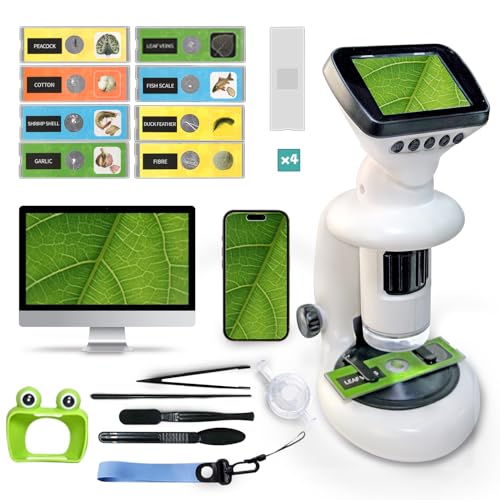
Microscopes show usability making or breaking a toy. A traditional microscope with an eyepiece asks a child to close one eye, line up their gaze and hold still. Many young children find that fiddly and give up. A digital microscope with a screen removes the barrier entirely. The child just looks at a screen and sees the image, and several can view at once. A screen-based model like the GEMUFO kids microscope shows why this format wins for younger explorers. The science starts the moment they switch it on, not after a struggle to see anything.
Choosing a first microscope
Beyond screen versus eyepiece, a few things make a first microscope work. Included prepared slides give instant things to look at, so a child is not stuck with nothing to examine on day one. A camera that saves photos adds a rewarding keep-and-share element. Portability keeps exploration active, letting a child take it outside to hunt for specimens. And set expectations. Kids microscopes are educational toys tuned for fun and learning. Their magnification numbers are typical of that category, not laboratory grade. Buy for engagement, not spec-sheet accuracy, and everyone is happier.
Beyond microscopes: a spread of science play
Microscopes are one door into science. There are many. Building and engineering sets develop spatial and problem-solving skills. Simple chemistry and crystal-growing kits show cause and effect. Telescopes and star charts open up astronomy. Nature kits, bug viewers, magnifiers and collecting jars turn a walk into fieldwork. Coding toys and robotics introduce logic. A good mix over time lets a child find the branch of science that grabs them. So do not feel one kit has to do everything.
Age-matching without over-buying
Match the toy to the stage. Young children thrive with big, simple, tactile tools: bug viewers, magnifiers, chunky building sets, where the wow is instant and the parts are safe. Older children handle more detail, real slides, multi-step experiments, more capable instruments. Resist buying far above a child's age hoping they grow into it. A too-advanced toy usually just frustrates and gets abandoned. Better to match now and upgrade later than to overshoot.
The parent's part: explore alongside
The biggest factor in whether a science toy sticks is often you. Children engage far more when an adult explores with them, at least at first. Show how it works. Wonder aloud. Ask what they think will happen. Keep sessions short and driven by the child's curiosity. Celebrate discoveries rather than correctness. Leave the toy somewhere accessible, so it invites a return. A microscope on a low shelf gets used. One boxed on top of the wardrobe does not.
The bottom line
Science toys that actually get used are usable, open-ended and age-matched, and they connect to the real world. For a first microscope, a screen beats an eyepiece for young children. Included slides and a camera add instant value. Treat it as a fun educational toy, not a lab instrument. Spread the science play across different fields over time. Match the level to the child, and explore alongside them. Do that and a science toy becomes a doorway to years of curiosity, not another cupboard casualty.
Getting Kids into Science: Microscopes, STEM Kits and Toys That Actually Get Used at a glance
Why you can trust this guide
We compared these picks using verified manufacturer specifications, current retailer listings, and patterns in owner feedback, alongside editorial research. We focus on measurable differences such as performance, capacity, usability, and build quality. Pickpedia does not present editorial research as laboratory testing, and we do not claim hands-on testing unless it was actually performed.
Our top picks
A digital handheld kids microscope with a 2.4 inch screen, 200X to 1000X magnification, a built-in 2MP camera with USB photo sync, a detachable stand for handheld or lab use, and 12 prepared slides, sold as a STEM gift kit.
BrandGEMUFO
TypeKids digital handheld microscope
Screen2.4 inch
Magnification200X to 1000X
Camera2MP, photo and video
SharingUSB sync to computer or phone
ModesDetachable handheld or stand
IncludesStand and 12 prepared slides
Pros
- Screen viewing, no fiddly eyepiece
- Kids can use it themselves and share the view
- 200X to 1000X reveals hidden detail
- Camera saves and shares photos over USB
- Detaches for outdoor exploration
- Complete kit with 12 slides to start
Cons
- An educational toy, not a lab instrument
- Magnification figures are typical kid-grade
- Small parts and glass slides need supervision
Read our full review → Check price on Amazon ›
Note: Availability and specifications change often. Always confirm the current details on Amazon before buying.