Teslong 3.9mm Probe Industrial Borescope, 6 Inch IPS Review
A 3.9mm probe that goes where an 8mm one jams, on a 6 inch screen with a 6000 mAh battery and WiFi to a phone.
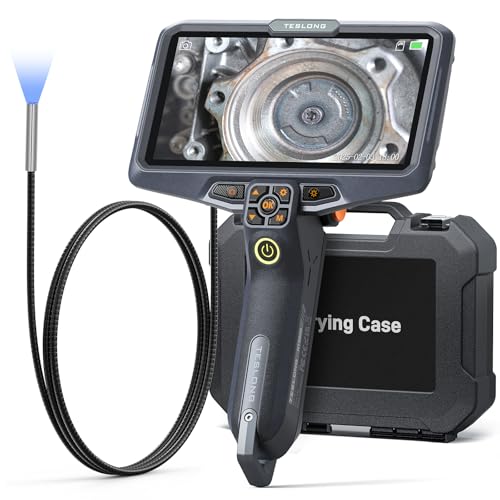
| Brand | Teslong |
|---|---|
| Probe diameter | 3.9 mm |
| Cable length | 5 ft |
| Screen | 6 inch IPS |
| Battery | 6000 mAh, USB-C fast charge |
| Probe lighting | 6 adjustable LEDs |
| Best for | Spark plug holes, injector ports and narrow pipe runs where a standard probe physically will not fit |
Product Overview
The only specification that truly matters on a borescope is whether the probe fits. Everything else is secondary, because an inspection you cannot physically reach is not an inspection, and this is where a 3.9mm probe separates itself from the common 8mm sort.
Teslong is specific about where that difference pays: spark plug holes, fuel injector ports and tight engine crevices where standard probes get stuck. Those are not edge cases, they are the most common reasons a mechanic reaches for a camera in the first place.
The trade is inherent to the format. A thinner probe means a smaller sensor and a smaller lens, so a fine probe gathers less light and resolves less detail than a fat one. That is physics rather than a design shortcoming, and it is why probe diameter is a choice rather than a ranking.
The six inch IPS screen is the other half of the design. A dedicated screen means no phone to pair and nothing to go wrong before you can look, and IPS specifically matters because you are often viewing it from an awkward angle while your hands are inside an engine bay.
Score Breakdown
This verdict is based on the manufacturer's stated specifications, the current Amazon listing and its product images, the confirmed materials and design, real buyer ratings, and our research into the product category. Scores are consistent editorial judgments, not laboratory measurements, and we did not receive a paid sample.
Key Features
The only borescope specification that is pass or fail, reaching spark plug holes and injector ports where an 8mm probe jams.
No phone to pair before you can look, and IPS holds its image when viewed from the awkward angle your hands force.
The right thing to oversize, because a borescope sits powered on with LEDs lit while you work the probe into position.
Knowing the remaining runtime before starting a job inside a wheel arch beats discovering it halfway through.
Dimming matters as much as brightening, because a bright ring inside a narrow metal pipe reflects back and washes out the image.
Lights the general workspace rather than the inspection point, and you need to see your hands to feed a probe accurately.
Rated for immersion rather than splashing, which is what a probe fed into a sump or a flooded pipe actually meets.
A second person can watch without crowding the screen, and a recorded inspection is the evidence you show a customer.
Lets the camera look sideways at a bore wall instead of only straight ahead, which is what makes it an inspection tool.
Design and Build Quality
The battery is stated at 6000 mAh and described as the largest in Teslong's range. On an inspection tool that is the right thing to oversize, because a borescope spends long periods powered on with its LEDs lit while you work the probe into position, which is a far heavier draw than the inspection itself.
USB-C fast charging and an on-screen battery indicator complete that properly. The indicator is the part people overlook: knowing how much runtime is left before starting a job inside a wheel arch is better than discovering it halfway in.
Lighting is handled twice over, with six adjustable LEDs in the camera ring and a separate built-in flashlight. The ring lights illuminate what the lens sees, and the adjustability matters because a bright ring in a narrow metal pipe reflects straight back and washes out the image. Being able to dim is as useful as being able to brighten.
The separate flashlight does a different job entirely, lighting the general workspace rather than the inspection point, which is a sensible inclusion given that you need to see your own hands to feed a probe accurately.
IP67 on the probe is the correct rating for the work. Teslong names wet pipe and oily engine environments, and the second digit covers immersion rather than splashing, which is what a probe fed into a sump or a flooded pipe actually encounters.
Performance in Everyday Use
WiFi streaming to a phone or tablet via an app is more useful than it first appears, and Teslong identifies why: a second person can see the feed without crowding the screen, and inspections can be recorded. For anyone showing a customer what is wrong inside their engine, that recording is the evidence.
The accessory set is complete rather than token. A hook retrieves dropped items, a magnet picks up ferrous ones, and a side mirror lets the camera look sideways at a bore wall instead of only straight ahead. That mirror is the one that converts a borescope from a tunnel viewer into an inspection tool.
An SD card is included, which matters because recording to internal memory only is a limitation you discover at the wrong moment. A hard case is also supplied, and on a tool with a fine flexible probe that is protection rather than packaging, since a kinked probe is a dead probe.
The significant gap is image specification. There is no stated camera resolution, no field of view angle and no depth of field anywhere in the listing. Those three determine what you can actually make out, and on a borescope they are as important as probe diameter.
That omission is worth weighing against the probe advantage honestly. The 3.9mm access is real and valuable, and a fine probe necessarily carries a modest sensor. If you need to read a part number off a cylinder wall rather than simply see whether a valve is damaged, ask for the resolution before buying.
How It Performs: The Evidence
| Decision factor | What we found | Evidence and measurement | Score | Why it matters |
|---|---|---|---|---|
| Probe access | 3.9 mm diameter probe | Listing states the 3.9mm ultra-thin probe slides into spark plug holes, fuel injector ports and tight engine crevices where standard 8mm borescopes get stuck | 9.8 | Probe fit is the only pass or fail specification on a borescope, because an inspection you cannot reach is not an inspection |
| Display | 6 inch IPS screen | Listing states a 6 inch IPS screen alongside the battery for all-day work | 9.4 | A dedicated screen needs no phone pairing, and IPS holds its image at the awkward angles hands inside an engine bay force |
| Battery | 6000 mAh with USB-C fast charging | Listing states the 6000mAh battery is the biggest in Teslong's lineup, with fast charging via USB-C and an on-screen battery indicator | 9.6 | A borescope runs powered with LEDs lit while the probe is positioned, which is a far heavier draw than the inspection itself |
| Lighting | Six adjustable LEDs plus flashlight | Listing states 6 adjustable LEDs in the camera ring plus an additional flashlight for broad-area lighting | 9.4 | Dimming is as important as brightening, since a bright ring in a narrow metal bore reflects straight back into the lens |
| Probe sealing | IP67 | Listing states the probe withstands water, dust and oil for wet pipe and oily engine environments | 9.5 | The second digit covers immersion, which is what a probe fed into a sump or flooded pipe encounters |
| Connectivity | WiFi streaming to phone or tablet | Listing states you can share the live camera feed to a phone or tablet via WiFi using an app, for collaborating or recording | 9.3 | A second viewer without crowding the screen, and a recorded inspection is the evidence shown to a customer |
| Accessories | Hard case, SD card, hook, magnet, side mirror | Listing states it includes a hard carrying case, SD card, hook, magnet and side mirror | 9.5 | The mirror converts a borescope from a tunnel viewer into a tool that can look at a bore wall, and the case protects a probe that dies if kinked |
| Image specification | Not published | The listing states probe diameter, screen size, battery and lighting but gives no camera resolution, field of view or depth of field | 2.5 | Those three determine what you can actually make out, which on a borescope matters as much as probe diameter |
Who Should Buy It
- Spark plug and cylinder inspection
- Fuel injector port checks
- Narrow pipe and drain runs
- HVAC duct and cavity inspection
- Home inspection behind walls
- Retrieving dropped items with the hook or magnet
- Anyone needing a documented image specification, or inspections beyond the cable length
- No camera resolution published
- No field of view or depth of field stated
- A fine probe necessarily carries a smaller sensor and lens
- Limited to the cable length
- WiFi viewing depends on an app
Full Specifications
How It Compares
| Feature | Teslong | Typical option | Higher-tier option |
|---|---|---|---|
| Probe diameter | 3.9 mm | 8 mm | Mid-size |
| Spark plug access | Yes | No | Sometimes |
| Screen | 6 inch IPS | Phone only | Smaller screen |
| Battery | 6000 mAh | Smaller | Moderate |
| Light adjustment | Six adjustable LEDs | Fixed | Adjustable |
| Extra flashlight | Yes | No | No |
| Probe rating | IP67 | Not stated | IP67 |
| WiFi streaming | Yes | No | Yes |
| Resolution published | No | No | Published |
Alternatives Worth a Look


Buy it for the probe diameter, which is the only borescope specification that is pass or fail: 3.9mm reaches spark plug holes and injector ports where an 8mm probe simply jams. The 6000 mAh battery is the right thing to oversize on a tool that sits powered on with LEDs lit while you feed the probe, and adjustable ring lighting matters because a bright ring in a metal pipe reflects straight back. The side mirror makes it an inspection tool rather than a tunnel viewer. No image specification is published.
Frequently Asked Questions
Why does the 3.9mm probe matter so much?
Because probe fit is pass or fail. Teslong names spark plug holes, injector ports and tight engine crevices where standard 8mm probes get stuck, and those are the most common reasons someone reaches for a camera. If it does not fit, nothing else about the tool helps.
Is a thinner probe always better?
No, it is a trade. A thinner probe carries a smaller sensor and a smaller lens, so it gathers less light and resolves less detail than a fat one. That is physics rather than a flaw, which is why diameter is a choice matched to the job rather than a ranking.
What resolution is the camera?
Not published, and that is the listing's real gap. No resolution, field of view or depth of field appears anywhere, and those three determine what you can make out. Ask before buying if you need to read a part number rather than just see obvious damage.
Why is the battery so large?
Because of how a borescope is used. It sits powered on with its LEDs lit while you work the probe into position, which draws far more than the moment of inspection. At 6000 mAh the battery is oversized for the right reason.
Why would I want to dim the lights?
Because a bright ring light inside a narrow metal pipe reflects straight back into the lens and washes out the image. Adjustability means you can reduce it until the surface is readable, which is why six adjustable LEDs beats a fixed bright ring.
What does the side mirror do?
It lets the camera look sideways instead of only straight ahead, so you can inspect a bore wall or a pipe surface rather than just the tunnel in front of the probe. It is the accessory that makes the tool genuinely useful for inspection.
Can I show someone else what I am seeing?
Yes. The feed streams over WiFi to a phone or tablet, so a colleague can watch without crowding the screen and the inspection can be recorded. For anyone explaining a fault to a customer, that recording is the evidence.
Can the probe go into liquid?
IP67 covers immersion rather than just splashing, and Teslong names wet pipe and oily engine environments specifically. That is the appropriate rating for a probe that will be fed into a sump, a flooded pipe or an oily crankcase.
This review is based on the manufacturer's stated specifications, the current product listing and its images, the stated probe diameter and cable length, the screen size and type, the battery capacity and charging method, the LED and flashlight description, the stated ingress rating, the wireless streaming capability and the listed accessories, plus our own research into why probe diameter trades against sensor size, why ring light adjustability matters in reflective bores, and what a side mirror attachment adds. It is editorial analysis, not laboratory testing. We have not inspected anything with this tool, and we have noted that no image specification is published.